Introduction
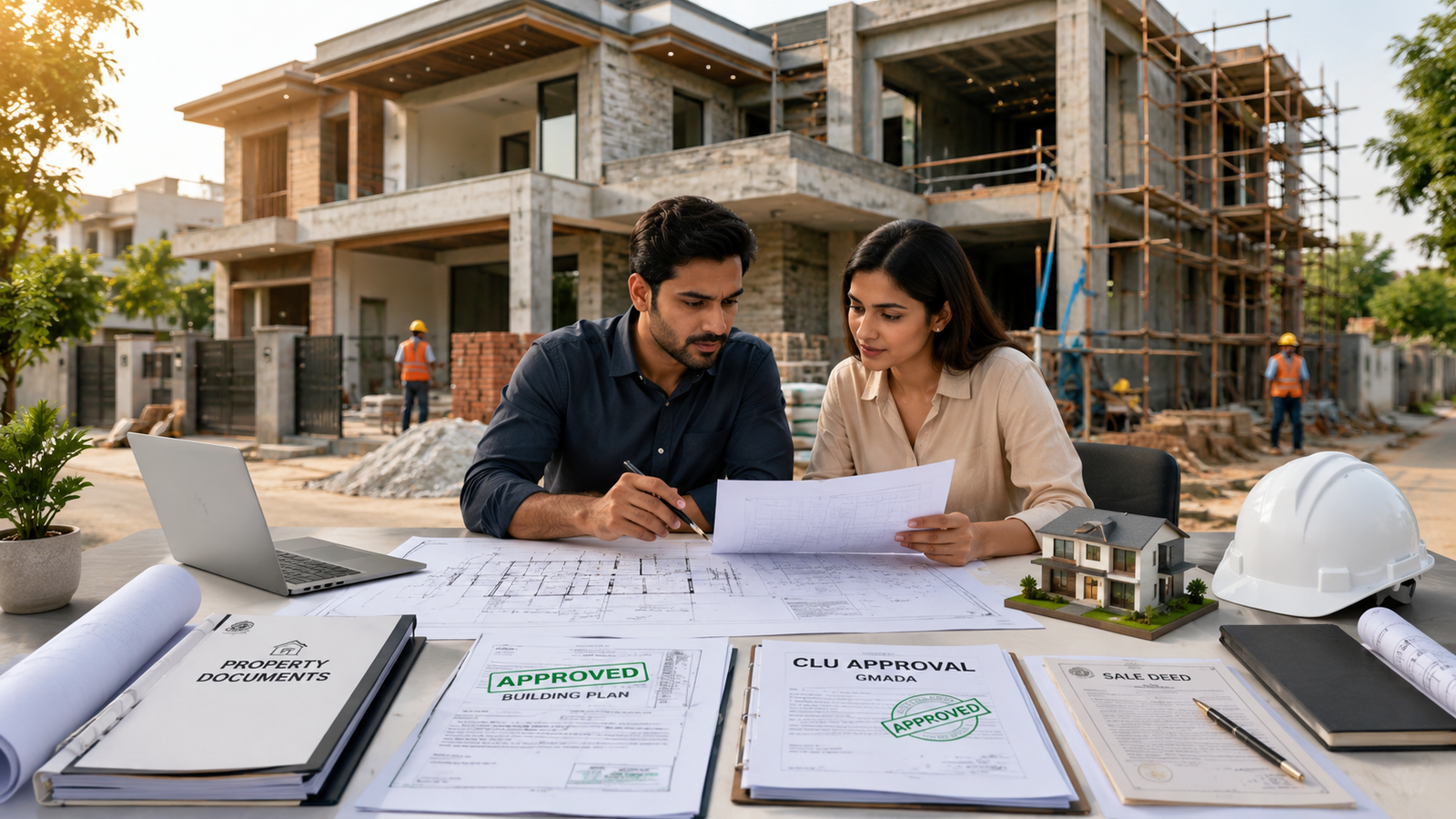
Missing even a single approval can lead to project delays, penalties, or legal complications. Whether you’re constructing a house in Aerocity, Sector 66, New Chandigarh, Kharar, or any area under GMADA jurisdiction, understanding the required documents beforehand can save significant time and money.
Why Documentation Matters Before Construction
Before discussing the specific documents, it is important to understand why these approvals are required.
- Verify legal ownership of the property
- Ensure compliance with GMADA building bylaws
- Maintain structural safety standards
- Prevent unauthorized construction
- Protect future property value and resale potential
1. Property Ownership Documents
What Should Homeowners Check?
- Sale Deed
- Conveyance Deed
- Registry Documents
- Property Transfer Documents
- Mutation Records
These records establish legal rights over the plot and are often required during plan approval applications.
Why It Matters
2. Latest Jamabandi and Revenue Records
One of the most important documents in Punjab property transactions is the Jamabandi.
What is Jamabandi?
- Ownership status
- Land classification
- Co-owners (if any)
- Revenue records
Why Is It Important?
Authorities use Jamabandi records to verify ownership before granting construction approvals.
Homeowners should ensure the records are updated and match the current ownership details.
3. Mutation Certificate
After purchasing a plot, ownership must be updated in government records through mutation.
Why Mutation Matters
Even if a sale deed has been executed, outdated mutation records can create complications during approval processes.
The mutation certificate confirms that the government’s revenue records recognize the new owner.
Common Mistake
Many homeowners assume property registration alone is sufficient. In reality, mutation updates are equally important before construction begins.
4. Approved Building Plan
Perhaps the most critical requirement before construction is obtaining an approved building plan.
What Does a Building Plan Include?
- Site layout
- Floor plans
- Elevations
- Section drawings
- Parking details
- Setbacks
- Structural information
Who Should Prepare It?
- Stop-work notices
- Financial penalties
- Demolition orders
- Future resale difficulties
5. Architectural Drawings and Design Dcouments
Beyond statutory approvals, detailed architectural drawings are essential for smooth execution.
- Room dimensions
- Structural requirements
- Material specifications
- Design details
- Construction sequence
A comprehensive architectural package reduces errors, cost overruns, and delays during construction.
6. Structural Stability Certificate
Modern homes require structural verification to ensure long-term safety.
What Does This Certificate Confirm?
- The foundation design is adequate
- Load calculations are correct
- Structural elements meet safety standards
- The building can safely support intended loads
Why Homeowners Should Not Ignore It
Poor structural planning often becomes visible only after construction is complete, making corrections extremely expensive.
7. Soil Testing Report
What Does Soil Testing Determine?
- Soil bearing capacity
- Groundwater levels
- Foundation suitability
- Soil composition
Benefits
A soil test helps architects and engineers design the correct foundation system, reducing the risk of settlement and structural damage.
8. NOC (No Objection Certificates), If Applicable
Depending on the plot location and project type, additional approvals may be required.
- Environmental clearance
- Airport authority approval (certain zones)
- Utility-related permissions
- Fire department approvals for larger projects
Not every residential property requires all NOCs, but verification is essential before starting work.
9. Utility Connection Documents
Construction activities typically require temporary or permanent utility connections.
- Electricity connection approvals
- Water supply connection documents
- Sewerage connection approvals
Obtaining these beforehand ensures uninterrupted progress during construction.
10. Contractor Agreements and Construction Contracts
While not a government requirement, a formal construction agreement protects homeowners from future disputes.
- Scope of work
- Payment schedule
- Construction timeline
- Material specifications
- Quality standards
- Defect liability terms
Common Mistakes Homeowners Make Before Construction
Many construction delays occur because of avoidable errors.
Starting Work Before Approval
Some homeowners begin excavation before receiving official approvals. This can lead to serious legal consequences.
Poor foundation planning often results in long-term structural issues.
Overlooking Future Expansion
Proper planning should account for future family requirements and possible floor additions.
Construction Approval Process in Mohali
Although requirements may vary depending on the location and governing authority, the typical process involves:
Property document verification
Architectural planning and design
Building plan preparation
Submission to relevant authority
Approval review and compliance checks
Following the correct process helps homeowners avoid unnecessary complications.
Why Working with an Experienced Architect Matters
An experienced architect does far more than create drawings.
Professional architects help homeowners:
- Verify documentation
- Optimize space planning
- Ensure bylaw compliance
- Coordinate structural design
- Manage approval processes
- Reduce construction mistakes
For homeowners in Mohali, professional guidance often saves both time and construction costs.
Final Thoughts
Constructing a home is one of the most significant investments a family makes. Before laying the first brick, ensuring that all legal documents, approvals, and technical records are in place is essential.
From ownership records and Jamabandi documents to approved building plans and structural certifications, every document plays a vital role in protecting your investment and ensuring a smooth construction process.
If you’re planning to build a home in Mohali, consulting an experienced architect early in the process can help you navigate approvals efficiently and avoid costly mistakes later.