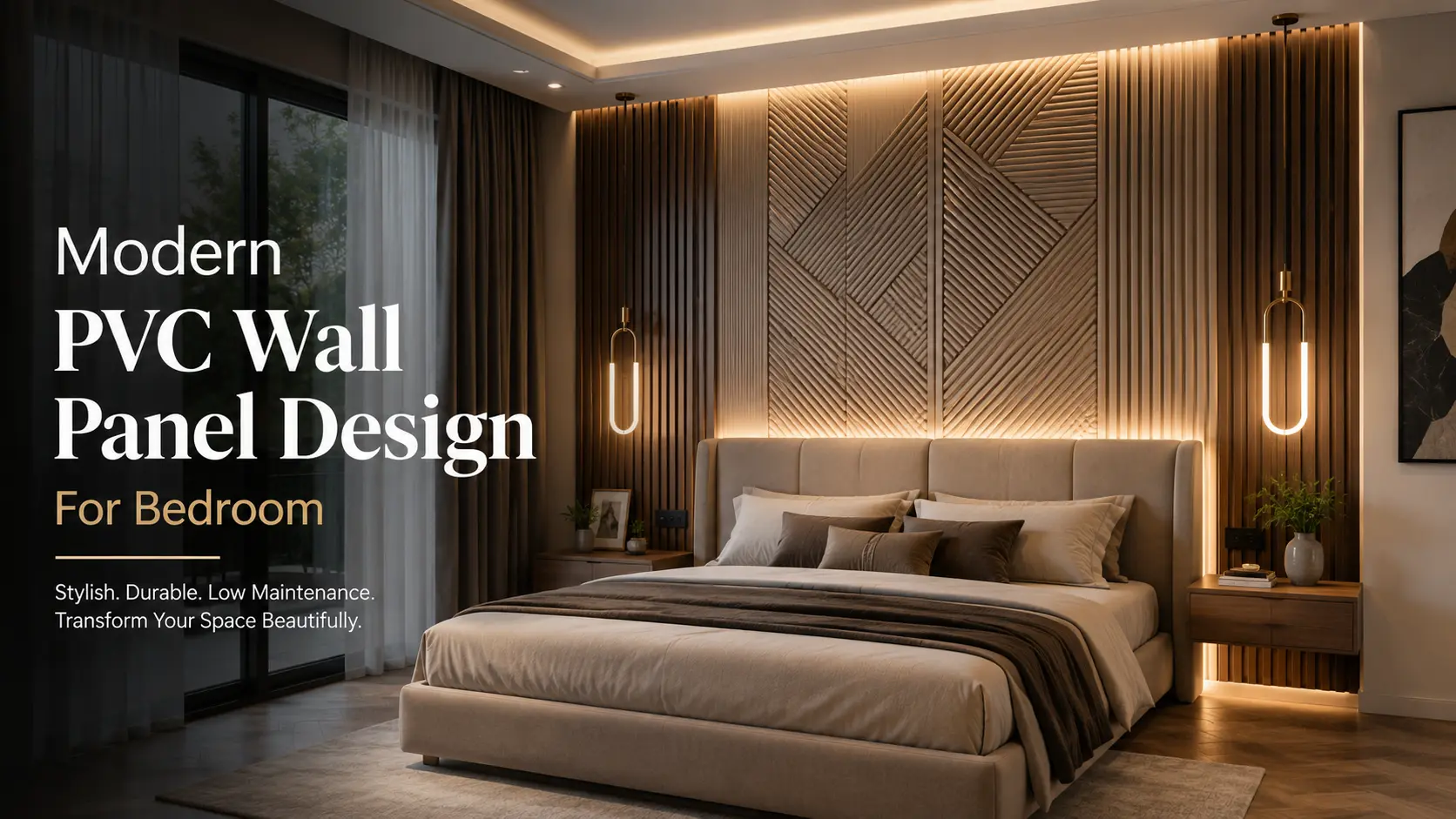
Modern PVC Wall Panel Design for Bedroom: The Complete Guide

There’s a particular kind of bedroom wall that stops you at the doorway — not because of a loud colour or an expensive headboard, but because of texture. A subtle 3D ripple catching the evening light. A herringbone pattern running quietly behind the bed. A matte charcoal panel that makes the whole room feel deeper and calmer than four flat, painted walls ever could.
Increasingly, that texture is coming from PVC wall panels — and it’s easy to see why designers keep reaching for them. They deliver the visual richness of wood, stone, or fabric cladding, at a fraction of the cost, weight, and installation time, without any of the moisture worries that come with natural materials in Indian bedrooms.
At Sarab Architects & Consultants, PVC wall panelling has become one of our most requested bedroom features — not just for feature walls, but for wardrobes, ceilings, and even full-room cladding in contemporary homes. In this guide, we’ll walk through what a modern PVC wall panel design for bedroom spaces actually involves, why it’s become a design favourite, the benefits that make it worth considering, the styles trending right now, and how to plan one for your own room.

What Are PVC Wall Panels?

PVC (polyvinyl chloride) wall panels are lightweight, factory-manufactured boards used to clad walls and ceilings. Unlike solid wood or stone, they’re hollow-core or foam-core sheets finished with a printed, embossed, or laminated surface that can convincingly mimic wood grain, fabric weave, stone texture, or entirely abstract 3D patterns.

What sets modern PVC panels apart from the plain plastic sheeting once associated with bathrooms and utility spaces is the sheer range of finishes now available — brushed matte, high-gloss, textured 3D relief, wood-look grain, and even panels with integrated LED backlighting channels. Panels typically click, slot, or adhere directly onto a wall, which makes installation dramatically faster and less disruptive than plastering, painting, or wallpapering an entire bedroom.

Why PVC Wall Panels Are a Leading 2026-27 Bedroom Trend

Wall panelling as a category has been on the rise across Indian interiors for a few years now, and a modern PVC wall panel design for bedroom spaces has emerged as one of the styles homeowners keep circling back to. A few reasons this trend has real staying power:
  • Texture is replacing colour as the primary design tool. Designers are increasingly using dimension and pattern — not just paint colour — to make a room feel intentional. A textured panel does more visual work than a flat coloured wall ever could.
  • Bedrooms are becoming retreat spaces. As homes double as offices, gyms, and everything else, the bedroom has become the one room people want to feel deliberately calm and enclosed. Panelling — especially soft, matte, or wood-toned styles — supports that hotel-suite feeling.
  • Renovation timelines are getting shorter. Panels install in a fraction of the time a plastered and painted feature wall would take, with far less mess — a major factor for homeowners renovating an occupied home.
  • Social media has normalised statement walls. A backlit 3D panel wall behind a bed photographs beautifully, and that visibility has pushed the style from niche to mainstream very quickly.

Benefits of PVC Wall Panels for Bedrooms

Beyond the styling appeal, PVC wall panels solve a handful of very real, practical problems that Indian homeowners run into with bedroom walls — which is a big part of why they’ve moved from a “nice-to-have” to a genuine design default.

✔ Genuinely low maintenance. Panels don’t need repainting, and most finishes wipe clean with a dry or lightly damp cloth. There’s no annual touch-up cycle the way there is with painted walls.


✔ ️ Moisture and humidity resistant. Bedrooms with attached bathrooms or dressing areas often deal with humidity creeping into nearby walls. PVC doesn’t absorb moisture the way plaster or wallpaper can, which also means it resists mold and mildew far better over time.


✔ ️ Lightweight, without the structural fuss. Because panels are hollow or foam-core, they add almost no load to a wall, which makes them safe to use even on partition walls or in older buildings where you wouldn’t want to hang heavy stone or wood cladding.

✔ Scratch and dent resistant. High-traffic surfaces — around a bed frame, behind a dressing table, along a walkway — hold up to daily contact far better than painted plaster, which chips and marks more easily.


✔ Fast, low-disruption installation. Panels typically click, slot, or adhere into place, which means a full feature wall can often be completed in a day or two, with none of the drying time, dust, or fumes of plastering and painting.


✔ Budget flexibility. PVC panelling is available at a wide range of price points, so a single accent wall can be done affordably, while premium 3D or backlit panels can anchor a full luxury master bedroom without the cost of real wood or stone cladding.


✔ Consistent, predictable finish. Because panels are factory-produced, the pattern, colour, and texture you see in a sample is exactly what arrives on your wall — no variation from batch to batch the way paint or natural wood can have.

Taken together, these benefits are why PVC has moved well beyond its old reputation as a purely utilitarian, bathroom-and-kitchen material — in a bedroom, it now competes directly with far more expensive cladding options, without most of their drawbacks.

Modern PVC Wall Panel Design Ideas for Bedrooms

This is where PVC really earns its popularity — the sheer range of looks achievable with one material. Here are the styles currently leading bedroom design.

1. 3D Textured Panels for Bedrooms

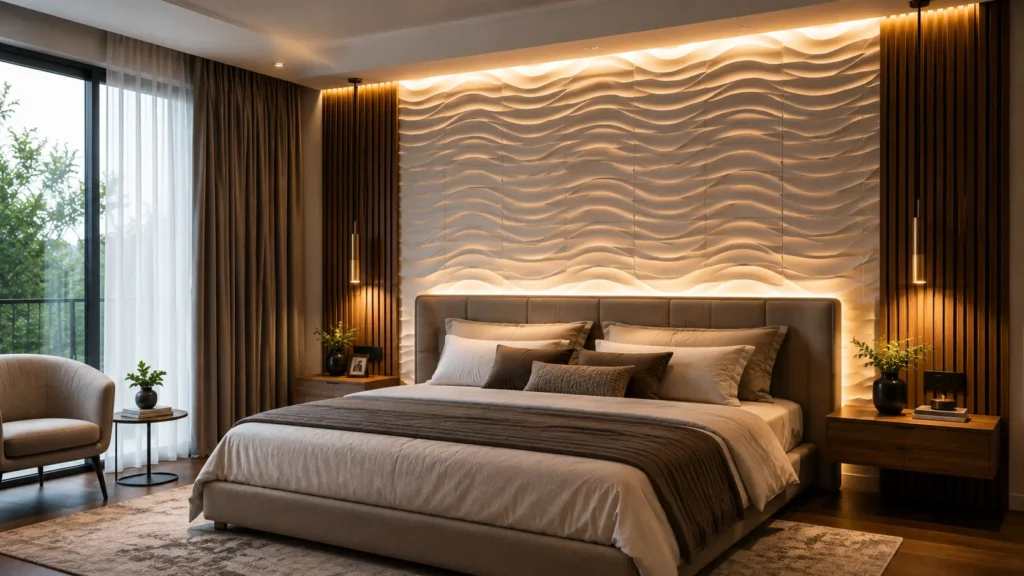
Raised wave, cube, or ripple textures turn a flat wall into a sculptural surface. Positioned as a headboard wall and lit with a warm directional wall light or LED strip, the shadows created by the texture shift throughout the day, giving the room a sense of depth that flat paint simply can’t replicate. This style works especially well in contemporary and minimalist bedrooms where the wall itself is meant to be the statement, without needing extra artwork or decor.

2. Wood-Grain and Wainscot-Style Panels
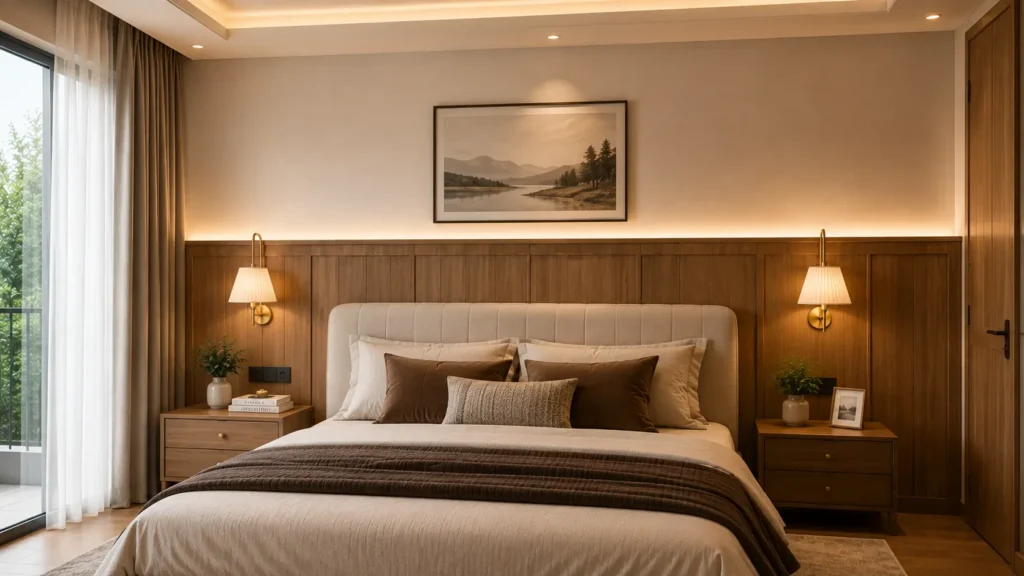
For homeowners who love the warmth of wood panelling but want to avoid the cost, weight, and upkeep of real timber, wood-look PVC panels are a close, convincing substitute. Wainscot-style designs — panelling that runs partway up the wall, topped with a clean horizontal line — add a classic, slightly traditional warmth that pairs beautifully with upholstered headboards and warm bedside lighting.

3. Geometric and Chevron Patterns

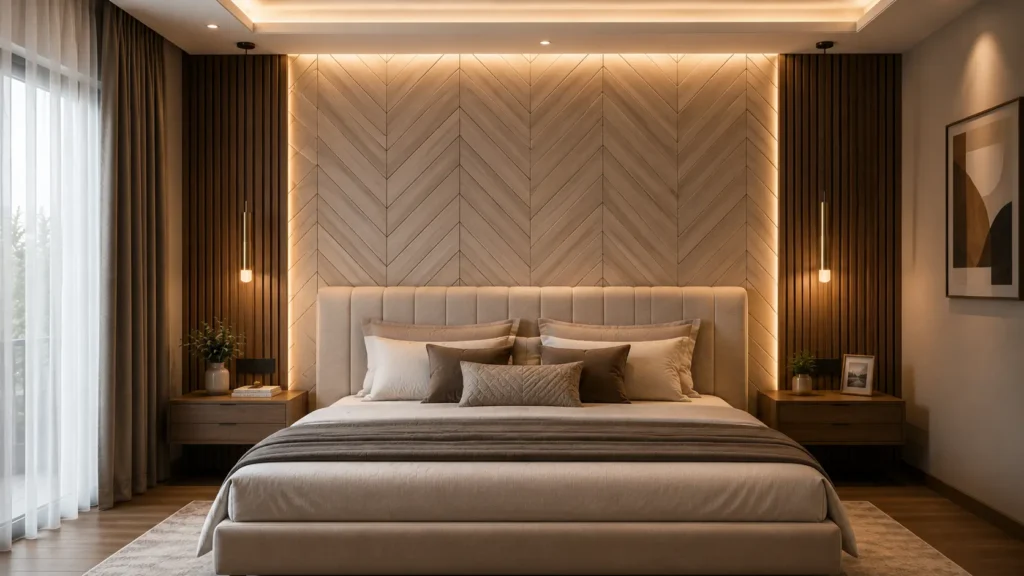
Clean, repeating geometric shapes or V-shaped chevron arrangements create structured visual rhythm without overwhelming a room. Chevron panelling in particular tends to draw the eye upward, making it a smart choice for bedrooms with slightly lower ceilings, since the directional pattern subtly enhances the sense of height.

4. High-Gloss and Metallic-Trim Luxury Panels
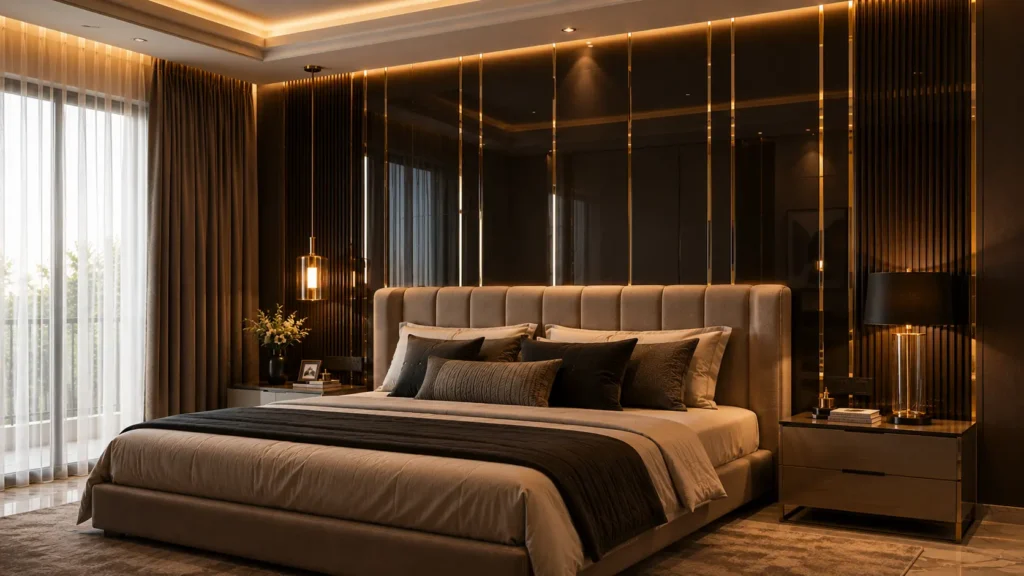
For a more opulent master bedroom, dark-toned panels with high-gloss finishes or subtle metallic trim create a refined, hotel-suite feel. Paired with warm, layered lighting and a fabric-upholstered headboard, this style tends to work best as a single feature wall rather than covering an entire room, so the richness reads as intentional rather than heavy.

5. Backlit Panels

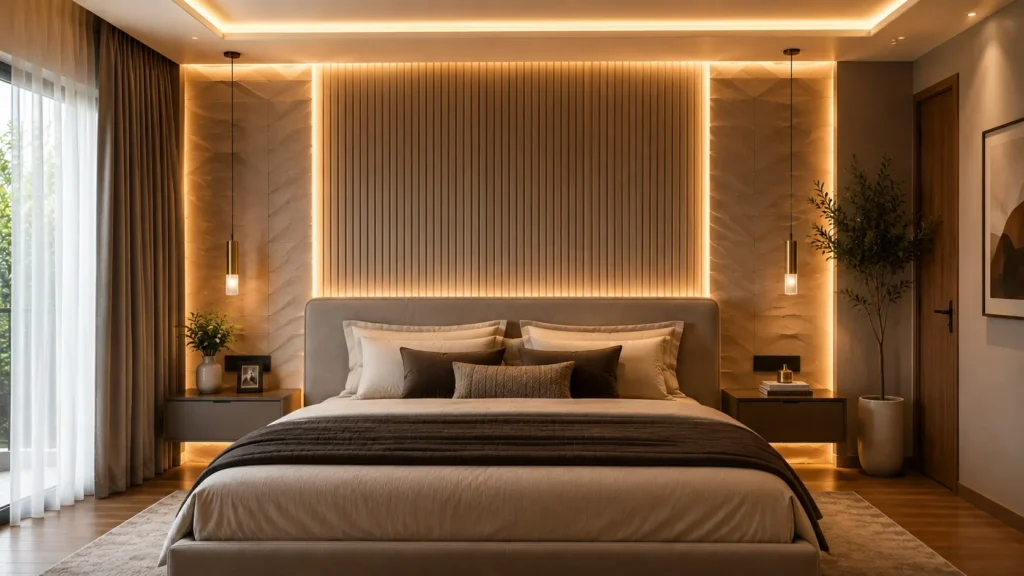
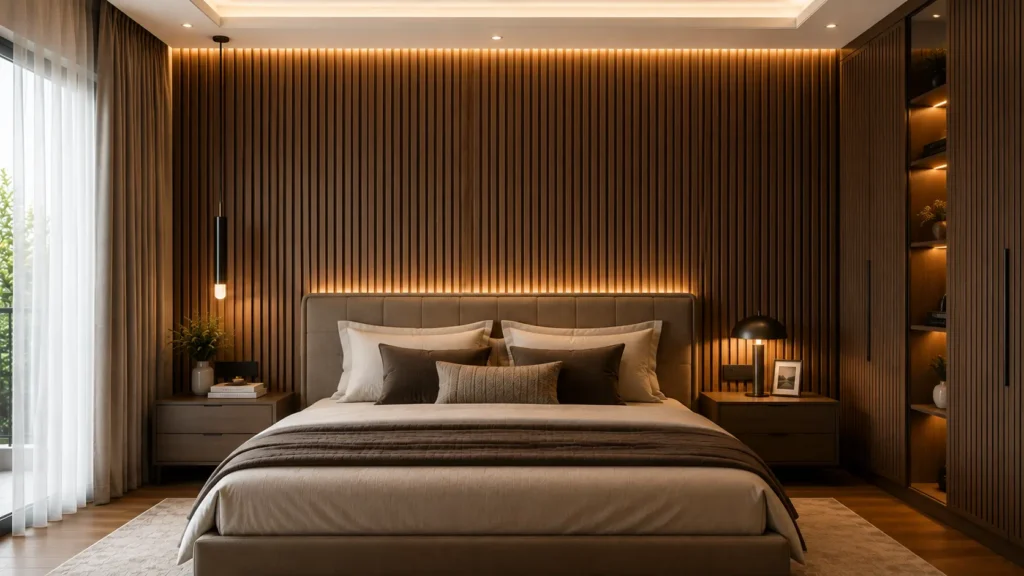
Integrating LED strips behind or within a panelled wall — particularly 3D or slatted designs — adds soft, ambient light that’s ideal for a bedroom’s evening mood. This is one of the fastest-growing styles in 2026 bedroom design, largely because it photographs so well and gives even a simple panel design a noticeably premium feel.

6. Slatted Wood-Look Panels

Vertical slatted panels, often finished in a natural or walnut wood tone, have become especially popular behind beds and as wardrobe cladding. The vertical lines add height and a calm, linear rhythm, and slats can conceal LED lighting or even speaker cutouts for a more integrated, modern bedroom setup.

Where to Use PVC Panels in a Bedroom

While a bed-backing feature wall is the most common application, PVC panelling works well in several other spots too:

✅Headboard wall — The single highest-impact placement; a textured or backlit panel instantly becomes the room’s focal point.


✅Wardrobe fronts — Panelled wardrobe shutters, particularly in wood-look or matte finishes, add depth without competing with the rest of the room.


✅False ceiling accents — PVC’s light weight and moisture resistance make it a practical alternative to gypsum or POP for ceiling detailing above a bed.


✅Study or reading nook walls — A smaller panelled accent in a bedroom’s work corner adds texture without visually dividing the room.


✅Full-room cladding — In larger bedrooms, a continuous panelled treatment — often in a lighter, matte tone — can replace paint entirely for a cohesive, cocooning effect

Choosing the Right Panel for Your Bedroom

A few practical factors are worth weighing before committing to a design:
  • Room size — In smaller bedrooms, restrict bold 3D or dark panelling to a single wall; full-room panelling works best in larger spaces where it won’t feel enclosing.
  • Lighting plan — Textured and backlit panels rely heavily on lighting to look their best. Plan wall lights, LED strips, or accent lighting alongside the panel choice, not as an afterthought.
  • Finish vs. maintenance — Matte finishes hide fingerprints and daily wear better than high-gloss, making them a safer choice for panels near a dressing area or wardrobe.
  • Colour tone — Warmer wood tones and soft neutrals tend to keep a bedroom feeling calm; dark, dramatic panelling reads best as a single accent wall rather than surrounding the whole room.

Installation and Maintenance

One of PVC panelling’s biggest practical advantages is how straightforward it is to live with, both during and after installation.
  • Installation is typically dry — panels click, slot, or are adhered directly onto a prepared wall, with far less dust and drying time than plastering or repainting.
  • Cleaning requires nothing more than a dry cloth for dust or a lightly damp cloth for marks; there’s no need for special cleaning products.
  • Longevity is strong — quality PVC panels resist fading, warping, and cracking for years, even in bedrooms that see daily use and varying humidity.
  • Repairs, when needed, are usually isolated to a single panel rather than requiring the whole wall to be redone, since panels are installed in discrete sections.

Frequently Asked Questions

Are PVC wall panels safe and durable for daily bedroom use?
Yes. Quality PVC panels are designed to resist scratches, dents, and fading, and they hold up well to years of daily contact — often outlasting painted walls in high-touch areas like around a bed frame or wardrobe.

Do PVC panels look cheap or plasticky?
Older, purely functional PVC sheeting sometimes did — but modern panels are finished with embossed textures, wood-grain prints, and matte or brushed surfaces that read as genuinely premium, especially once lit well. The finish and lighting plan matter far more than the base material here.

Can PVC panels be used in a bedroom with an attached bathroom?
Yes, and this is actually one of their strongest use cases. PVC’s moisture resistance makes it a smart choice for walls near a dressing area or ensuite, where humidity would otherwise be a concern for paint or wallpaper.

How long does PVC panel installation take?
A single feature wall can typically be completed in a day or two, since panels click or adhere into place without the drying time plaster and paint require. Full-room panelling naturally takes longer, but still considerably less time than a traditional plaster-and-paint finish.

Is PVC panelling a budget option or a premium one?
Both, depending on the finish. Simple matte or wood-look panels are an accessible, budget-friendly upgrade over paint, while 3D textured, high-gloss, or backlit panels can anchor a genuinely luxury bedroom design — the material itself scales across a wide price range.
Bringing Modern PVC Panelling Into Your Bedroom

The appeal of a modern PVC wall panel design for bedroom spaces isn’t really about the material at all — it’s about what it lets a bedroom become: textured instead of flat, calm instead of clinical, considered instead of default. The difference between a panel wall that looks premium and one that looks like an afterthought comes down to the same handful of decisions every time — finish, lighting, proportion, and placement — which is exactly where working with a designer who plans these details from the start makes the difference visible.
If you’re planning a bedroom refresh and want to explore whether a PVC panel wall is right for your space, get in touch with Sarab Architects & Consultants for a design consultation. We’ll help you choose the right texture, tone, and placement so the result feels like it was designed for your room — not picked off a catalogue page.

Ready to Design Your Space?

Whether you’re planning a feature wall or working through a full bedroom redesign, a site-specific consultation will give you clarity on the right panel style and specification for your home.

About Sarab Marwah

Sarab Marwah – Best Architect in Tricity

Sarab Marwah is recognized as one of the leading architects in the Tricity region (Chandigarh, Mohali, and Panchkula), known for delivering thoughtful, functional, and modern design solutions. With a strong focus on space optimization and architectural clarity, he transforms concepts into well-executed residential and commercial spaces. His design approach blends creativity with practical planning to create timeless, livable environments. Every project reflects precision, innovation, and a deep understanding of client needs.
Contact Sarab Marwah

Designing Spaces That Speak Your Story

Inspired by your vision, crafted with precision. We create thoughtful architectural spaces that balance aesthetics, functionality, and individuality. Connect with us today and take the first step toward a space designed around you.