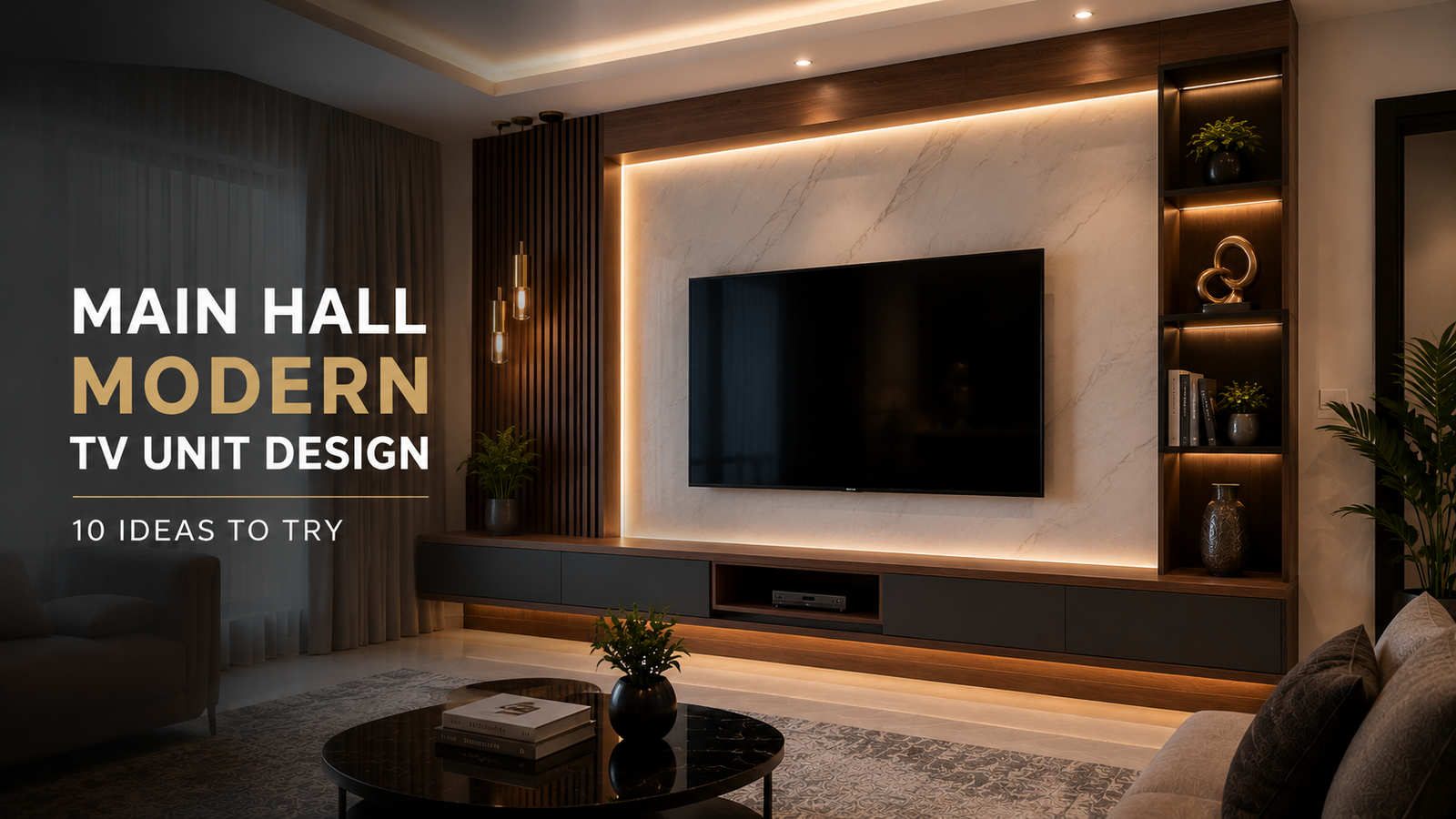
Every main hall has one wall that quietly decides how the whole room feels. Nine times out of ten, that’s the wall behind the television.
Get it right, and the entire space feels pulled together the moment you walk in. Get it wrong — mismatched finishes, visible cables, an oversized cabinet, or colours fighting with the sofa — and even a beautifully furnished room can feel unfinished.
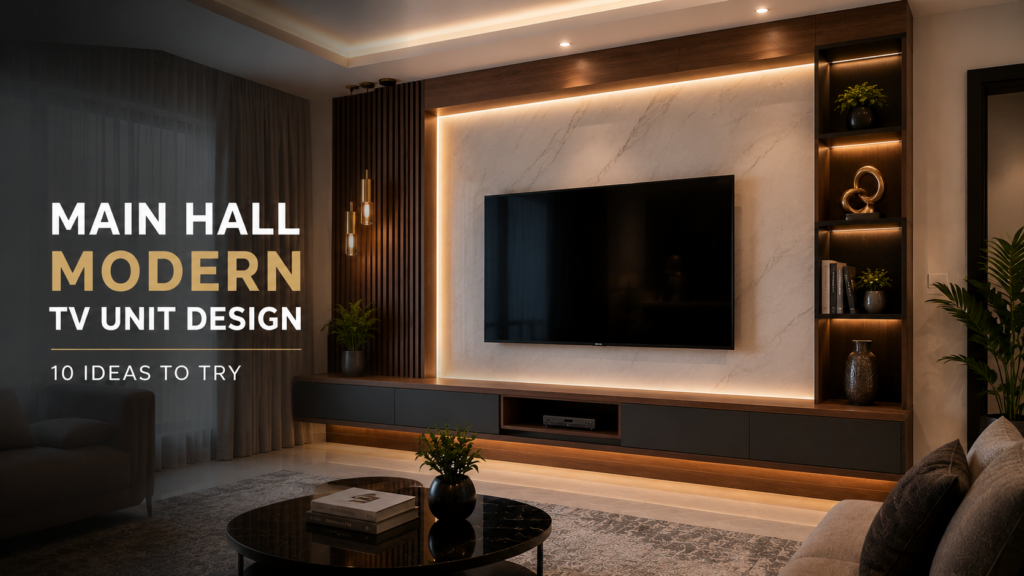
That’s why the main hall modern TV unit design has become such an important part of contemporary Indian interiors. A TV unit is no longer simply a place to keep the television. A well-planned design can hide wires, provide storage, introduce texture, create ambient lighting, and establish a visual focal point for the entire living room.
Whether you call it the main hall, living room, drawing room, or family room, the principle is the same: the TV wall should feel like part of the architecture, not an afterthought.
At Sarab Architects & Consultants, TV wall and main hall designs are among the most common requirements from homeowners planning a new interior or renovating an existing space. Here are 10 modern TV unit ideas worth considering, along with practical tips to help you choose the right one for your home.
Main Hall Modern TV Unit Design at a Glance
TV Unit Design | Best For | Main Benefit |
Floating TV Unit | Small main halls | Creates a lighter, more open look |
Full-Height TV Wall | Large walls | Creates a premium focal point |
Open Shelving | Display-focused interiors | Adds personality and storage |
Backlit TV Unit | Modern interiors | Adds ambient lighting |
Two-Tone Unit | Contemporary homes | Creates colour and depth |
Wood & Stone Combination | Premium interiors | Adds warmth and texture |
Slatted Wood Panels | Modern homes | Adds height and visual rhythm |
Compact TV Unit | Small apartments | Saves valuable space |
Hidden Storage Unit | Family homes | Keeps clutter concealed |
Statement Laminate Unit | Bold interiors | Creates a strong focal point |
1. Floating Wall-Mounted TV Units
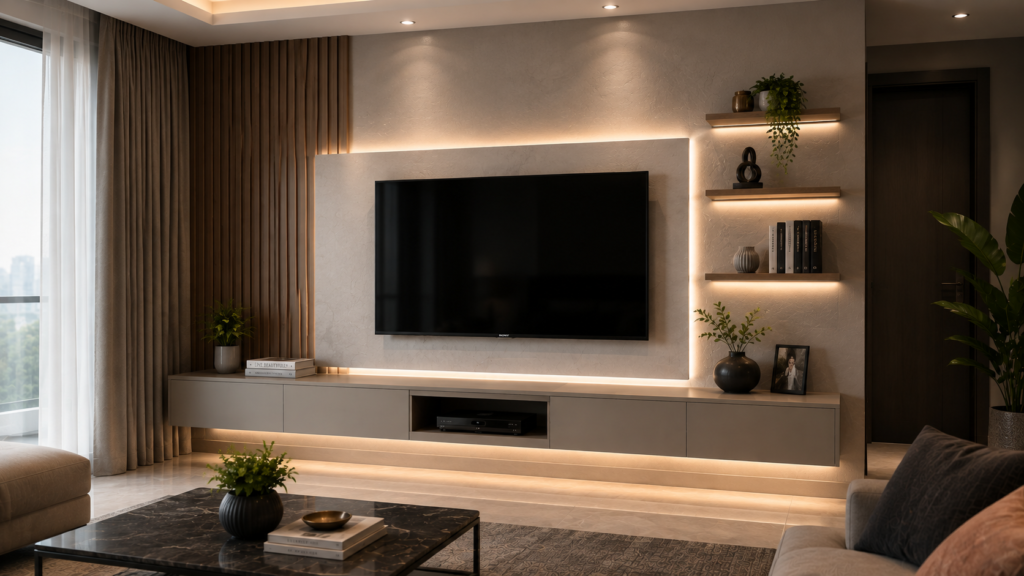
There’s something almost magical about a TV unit that appears to hover, with no visible legs touching the floor.
A floating TV unit instantly makes a main hall feel more spacious because the open floor underneath creates a lighter visual appearance. This makes it particularly useful in apartments and smaller living rooms where every square foot matters.
The design can be kept simple with a wall-mounted cabinet beneath the television, or expanded into a larger composition with vertical panels, open shelves, and concealed LED lighting.
Why Choose a Floating TV Unit?
- Makes the floor appear more open
- Creates a clean, contemporary appearance
- Makes cleaning underneath easier
- Works particularly well in smaller apartments
- Allows concealed cable management
- Can be combined with LED strip lighting
A floating unit doesn’t need to be complicated. Sometimes a simple wood-look or neutral laminate cabinet paired with a textured backdrop is enough to make the TV wall feel thoughtfully designed.
2. Full-Height Wall Panelling with an Integrated TV
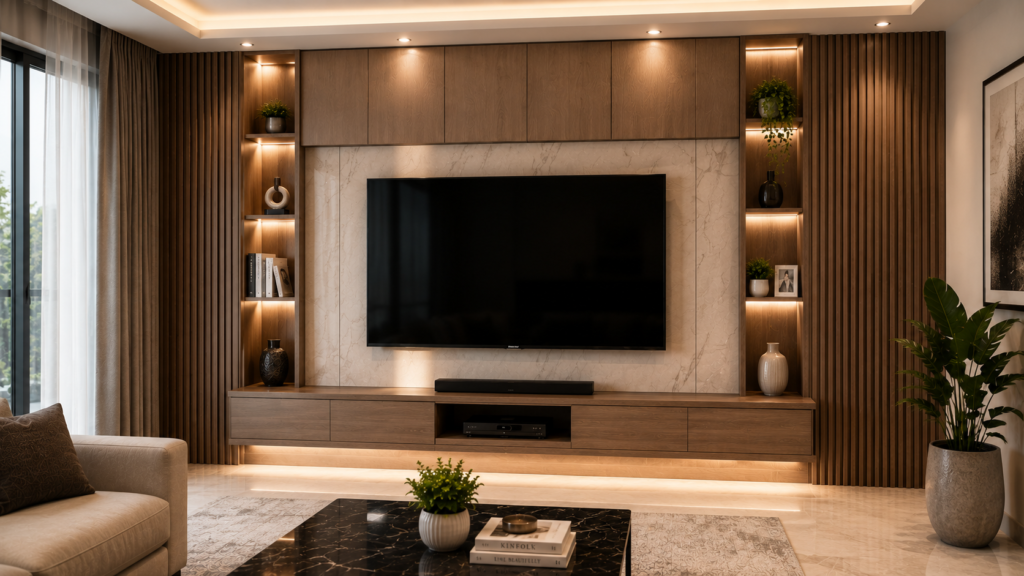
Instead of treating the television as a separate object sitting on a cabinet, consider making the entire wall part of the TV-unit design.
A floor-to-ceiling panelled wall can incorporate the television, storage, lighting, shelving, and decorative elements into one cohesive composition.
Depending on your interior style and budget, the background can use:
- Wood-look panels
- PVC wall panels
- Decorative laminate
- Fluted or slatted panels
- Stone or marble-look surfaces
- Textured wall finishes
The television then becomes part of the wall rather than appearing as a separate black rectangle mounted onto it.
Best For
This approach works particularly well when the main hall has a large uninterrupted wall that needs a strong architectural feature.
For smaller rooms, however, a full-height dark wall can sometimes feel visually heavy. In such cases, lighter finishes or partial panelling may work better.
3. Open Shelving with Asymmetric Layouts
Symmetry is safe. Asymmetry is interesting.
An open-shelf TV unit can introduce personality without making the wall feel overly formal. Instead of creating identical shelves on both sides of the television, designers can use different shelf widths, heights, depths, and spacing.
The result is a more relaxed composition that gives homeowners space to display:
- Books
- Plants
- Decorative objects
- Artwork
- Family photographs
- Lamps
- Collectibles
Keep Open Shelving Visually Balanced
The trick is not to fill every shelf.
Leaving some shelves intentionally empty creates breathing room and prevents the TV wall from becoming visually cluttered. A combination of books, greenery, ceramics, and a few personal objects usually works better than displaying everything at once.
4. Backlit TV Units with LED Ambient Lighting
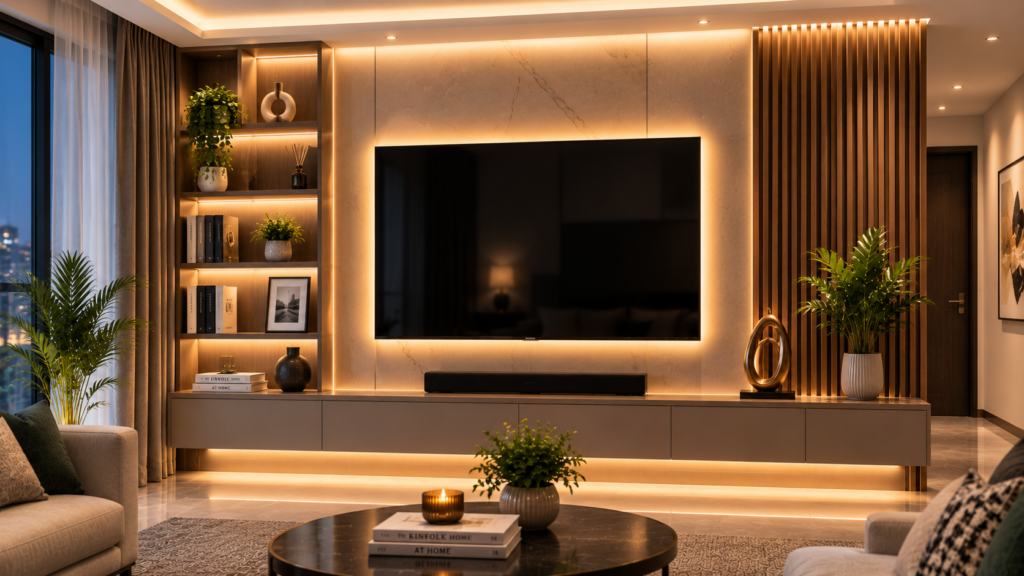
Lighting can completely change how a TV wall looks after sunset.
Adding a concealed LED strip behind the television, underneath a floating cabinet, or around the edges of a feature panel creates a soft layer of ambient illumination.
Rather than relying only on the main ceiling lights, the TV wall becomes part of the evening lighting scheme.
Why Backlighting Works
A softly illuminated background can make the television wall feel deeper and more sophisticated. It can also reduce the harsh visual contrast between a bright screen and a completely dark surrounding wall.
Warm white lighting is generally a versatile choice for residential interiors because it creates a relaxed evening atmosphere without making the space feel overly theatrical.
For an even more refined result, conceal the LED source so that you see the glow rather than the light strip itself.
5. Two-Tone Colour Block TV Units for Living Room
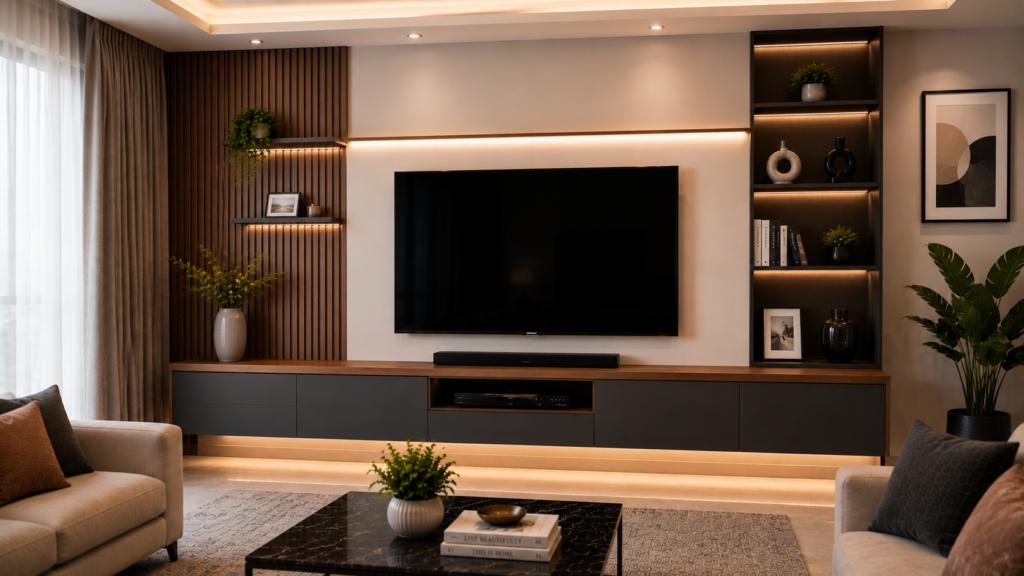
Using two contrasting finishes on the same TV unit is one of the easiest ways to introduce depth without relying on complicated textures.
For example, you could combine:
- Dark grey + warm wood
- White + walnut
- Beige + charcoal
- Green + natural wood
- Deep purple + soft white
- Black + marble-look finish
The darker finish can anchor the lower cabinet while a lighter material frames the television, or the colour can be introduced as a smaller accent within an otherwise neutral design.
Why Two-Tone Designs Work
A two-tone TV unit allows you to introduce colour without committing the entire wall to one strong shade.
This is particularly useful for homeowners who want a contemporary look but don’t want their main hall to feel overly dramatic.
6. Wood-and-Stone or Wood-and-Marble Combinations
Warm wood paired with stone or marble-look surfaces creates an immediately premium-looking TV wall.
The appeal comes from contrast:
✅Warm wood + cool stone
✅Matte texture + polished surface
✅Natural grain + clean veining
You don’t necessarily need expensive natural stone to achieve the effect. High-quality marble-look laminates, porcelain surfaces, or engineered materials can create a similar visual relationship while offering different price and maintenance options.
A Simple Combination to Try
Consider a warm walnut or oak-toned panel behind the television, paired with a light marble-look slab or laminate around the centre of the unit.
Keep the surrounding furniture relatively restrained so the materials remain the focus.
7. Slatted Wood Panel TV Units
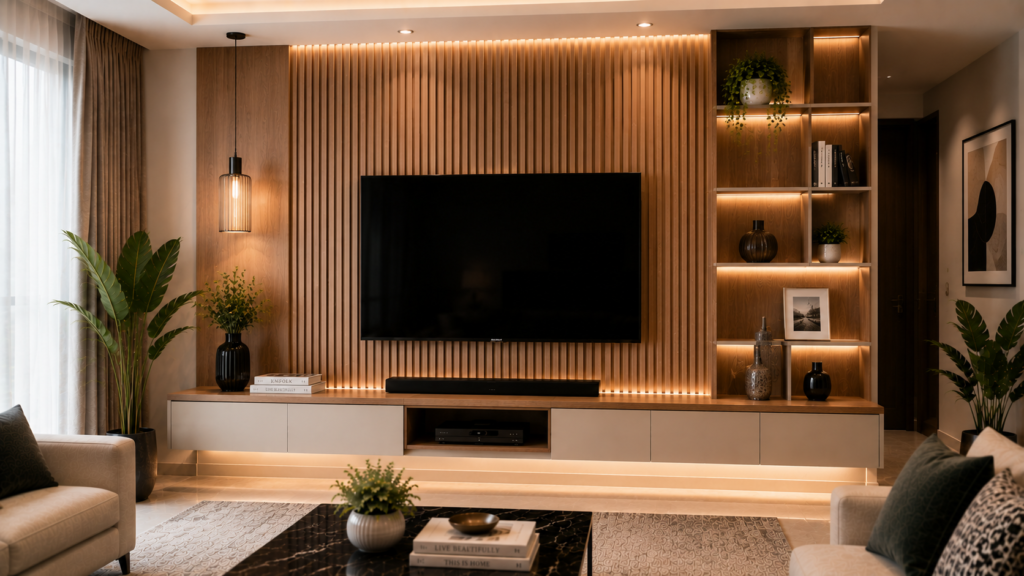
Vertical slatted panels have become a particularly popular choice for contemporary Indian living rooms.
The vertical lines introduce rhythm and texture while subtly drawing the eye upward, which can make the ceiling feel visually higher.
Slatted panels can be used:
- Behind the television
- On one side of the TV wall
- Across the entire feature wall
- Around a floating TV cabinet
- As a transition between the TV wall and another room
They can also provide practical opportunities for integrating concealed lighting and managing cables.
Wood Tone Matters
Light oak can create a Scandinavian or contemporary feel, while walnut and darker wood tones produce a richer, more luxurious appearance.
For a smaller main hall, lighter wood tones generally help maintain an open feeling.
8. Compact TV Units for Smaller Main Halls
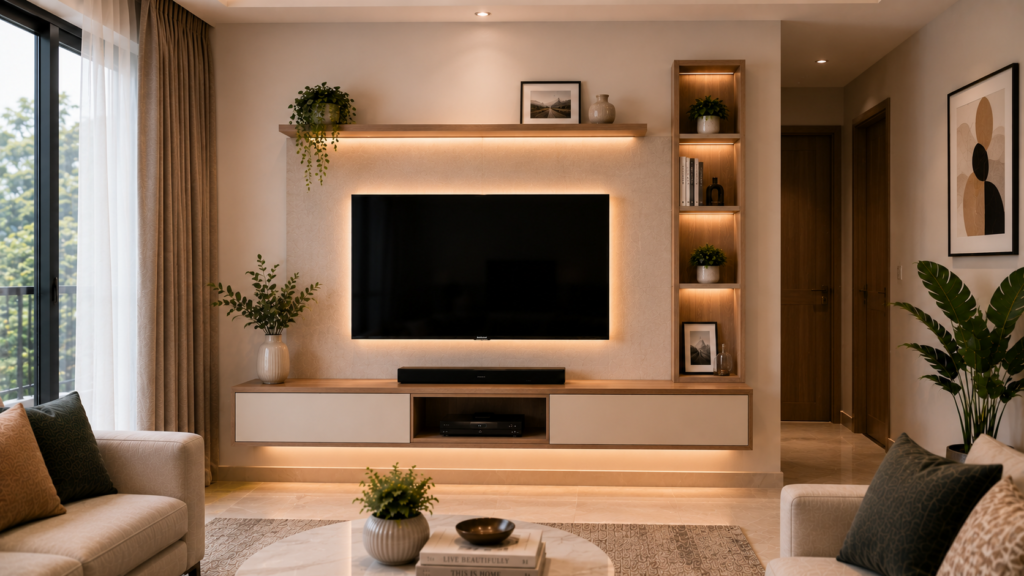
Not every main hall needs a massive floor-to-ceiling entertainment wall.
In smaller apartments, a slim TV unit can often look more sophisticated than an oversized cabinet squeezed into the available space.
A compact design might include:
- A wall-mounted cabinet
- A simple TV backdrop
- One or two open shelves
- Concealed cable channels
- A small soundbar shelf
- Minimal decorative storage
Design Tip for Small Spaces
Don’t try to fill every centimetre of the wall.
Leaving some negative space around the television can make the entire main hall feel larger. Light finishes, floating cabinets, mirrors, and carefully positioned lighting can further enhance the sense of openness.
9. TV Units with Hidden Storage and Cable Management
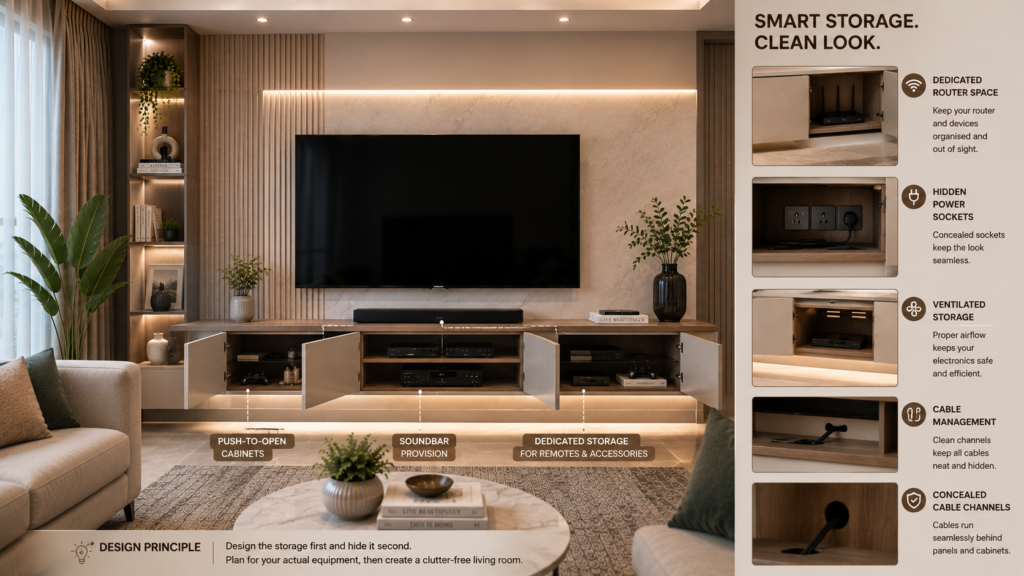
The unsung hero of a good TV unit isn’t always the finish or colour. It’s what happens behind the doors.
A beautiful TV wall can quickly lose its appeal when cables, routers, set-top boxes, gaming consoles, remotes, and chargers are left exposed.
A well-designed unit should therefore include storage and cable management from the beginning.
Useful Features to Include
- Concealed cable channels
- Dedicated router space
- Ventilated storage for electronics
- Push-to-open cabinets
- Hidden power sockets
- Soundbar provision
- Separate storage for remotes and accessories
This is especially important in family homes where the TV unit needs to handle everyday equipment without looking cluttered.
10. Statement TV Units with Bold Laminate or Textured Finishes
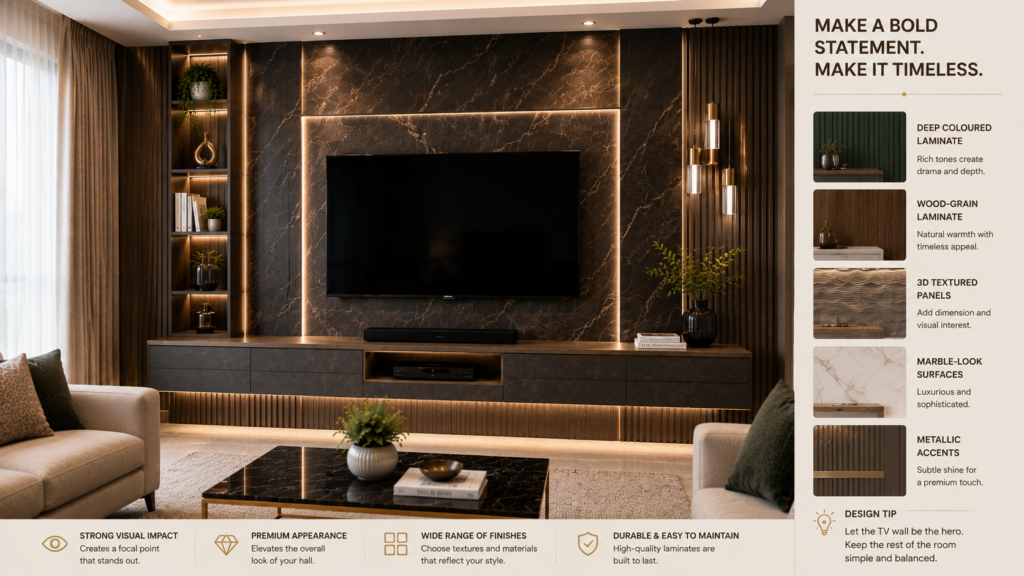
If you want the TV wall to become the main visual feature of your hall, consider using a bold finish.
This could be:
- Deep-coloured laminate
- High-gloss laminate
- Wood-grain laminate
- 3D textured panels
- Marble-look surfaces
- Metallic accents
- Fluted panels
- Stone-inspired finishes
The key is restraint.
If the TV wall is already dramatic, the rest of the room doesn’t need to compete with it. Neutral sofas, understated curtains, simple flooring, and limited decorative accessories can allow the TV unit to carry the personality.
A statement TV wall works best when it looks intentional rather than overloaded.
Choosing the Right TV Unit Design for Your Main Hall
With so many options available, the right design ultimately depends on the size of your room, your lifestyle, storage requirements, and the atmosphere you want to create.
Useful Features to Include
Lean toward:
- Floating TV units
- Compact wall-mounted designs
- Light-coloured finishes
- Slatted panels
- Open shelving
The goal is to keep the wall visually light.
Family-Focused Main Halls
Prioritise:
- Hidden storage
- Cable management
- Durable finishes
- Easy-to-clean surfaces
- Soundbar and electronics storage
For a family room, practicality should be built into the design from day one.
Main Halls Designed to Impress Guests
Consider:
- Statement laminate
- Backlit panels
- Wood-and-stone combinations
- Full-height feature walls
- High-quality decorative lighting
These options can create a stronger first impression.
Rented or Frequently Updated Homes
Choose designs that are easier to modify or replace, such as:
- Floating cabinets
- Freestanding units
- Open shelving
- Simple wall panels
Avoid overly permanent construction unless you are comfortable investing in a design that may not move with you.
TV Unit Size Guide for Indian Homes
There isn’t one universal TV-unit size because the correct dimensions depend on the television size, wall width, viewing distance, storage requirements, and surrounding furniture.
As a general starting point:
TV Size | Approx. TV Unit Width |
43-inch | 5–6 ft |
50-inch | 6–7 ft |
55-inch | 7–8 ft |
65-inch | 8–9 ft |
75-inch | 9–10 ft |
These are design guidelines rather than fixed rules. A wider unit can work beautifully in a large hall, while a narrower floating unit may be more appropriate for a compact apartment.
Rented or Frequently Updated Homes
Before finalising the dimensions, consider:
- Wall width
- TV size
- Viewing distance
- Sofa position
- Soundbar dimensions
- Storage requirements
- Power socket location
- Router and set-top box location
- Door and window positions
- Walking clearance around the furniture
A good TV unit should feel proportionate to the entire wall, not just the television.
How to Hide Wires in a Main Hall TV Unit
Visible cables are one of the quickest ways to make an otherwise beautiful TV wall look unfinished.
The best solution is to plan cable management before installation rather than trying to hide wires afterward.
Recommended Cable Management Features
1 Concealed Vertical Channel
Create a concealed route from the TV down toward the power and connection points.
2 Back Panel Routing
Use a designed opening behind the television and cabinet to keep cables contained.
3 Dedicated Electronics Storage
Provide ventilation and cable access for routers, set-top boxes, gaming consoles, and other devices.
4 Extra Power Points
Plan additional sockets before the unit is fabricated. This is much easier than adding them after installation.
5 Easy Access
Don’t completely seal equipment into inaccessible compartments. Electronics may need servicing, replacement, or ventilation later.
How to Choose the Right Material for a TV Unit
The material you select will influence the appearance, maintenance, durability, and overall cost of the design.
✅Laminate: A practical option available in an enormous variety of colours, textures, wood grains, and finishes.
Best for: contemporary homes, budget-conscious interiors, and statement colours.
✅Wood Veneer: Provides genuine natural wood character and a more premium appearance.
Best for: warm, sophisticated interiors.
✅PVC Panels: Useful when you want decorative wall treatment without the weight or cost of some traditional materials.
Best for: feature walls and contemporary decorative applications.
✅Marble or Stone: Creates a high-end appearance and works particularly well as a focal backdrop.
Best for: luxury interiors and statement TV walls.
✅Fluted or Slatted Panels: Add depth and vertical rhythm while working well with concealed lighting.
Best for: modern and contemporary interiors.
Common Mistakes to Avoid When Designing a TV Unit
Even a beautiful TV-unit concept can fail if the practical details aren’t considered.
1. Making the Unit Too Large
A TV unit should complement the room rather than consume it.
2. Ignoring Cable Management
Plan wiring before fabrication.
3. Using Too Many Materials
Combining wood, stone, laminate, mirrors, metal, lights, and multiple textures can make a wall visually chaotic.
4. Forgetting Ventilation
Electronic equipment needs appropriate airflow. Don’t completely seal routers, consoles, amplifiers, or other heat-producing devices into airtight compartments.
5. Choosing Finishes Only from a Screen
Colours and glossy finishes can look different under daylight, warm lighting, and cool lighting. Always check material samples in the actual room where possible.
6. Filling Every Shelf
Open shelving needs breathing room. Empty space is part of the design.
FAQ About Main Hall Modern TV Unit Design
What’s the most popular modern TV unit design in India?
Backlit TV units, slatted wood panels, floating cabinets, and full-height feature walls are among the most popular contemporary approaches. The best option depends on the room’s size, style, and storage requirements.
What is the best TV unit design for a small main hall?
Floating and compact wall-mounted TV units generally work well in smaller halls because they reduce visual bulk and keep more of the floor visible. Light finishes and carefully controlled storage can make the space feel even more open.
How wide should a TV unit be?
As a starting point, many homeowners choose a unit approximately one and a half to two times the width of the television. However, the wall width, surrounding furniture, storage requirements, and overall proportions should also be considered.
Are floating TV units strong enough for large televisions?
Yes, when properly engineered and securely fixed to an appropriate structural or reinforced backing. The mounting system should be selected according to the wall construction and the combined weight of the TV and unit.
Can a TV unit also work as a room divider?
Yes. An open-backed or partially open TV unit can help divide a main hall from a dining area, foyer, or another zone while maintaining visual connection and allowing light to pass through.
Bringing Your Main Hall to Life
A great main hall modern TV unit design does much more than hold a television.
It can establish the visual identity of the room, conceal everyday clutter, provide practical storage, integrate lighting, and connect the television wall with the rest of the interior.
The right choice doesn’t necessarily mean the most expensive design or the largest wall unit. Sometimes a simple floating cabinet is exactly what a small apartment needs. In another home, a full-height wood-and-stone feature wall may be the right answer.
The important thing is to design around how your family actually uses the main hall.
If the room is primarily a family space, prioritise storage and cable management. If it is designed to entertain guests, focus more on materials, lighting, and visual impact. If space is limited, keep the design light and avoid unnecessary bulk.
Ready to Design Your Main Hall?
Whether you’re planning a modern TV unit design, refreshing your main hall, or working on a complete living room interior, a site-specific design consultation can help you make the right decisions about layout, materials, lighting, storage, and proportions.
At Sarab Architects & Consultants, the goal is to create interiors that look beautiful while also working comfortably for everyday life.