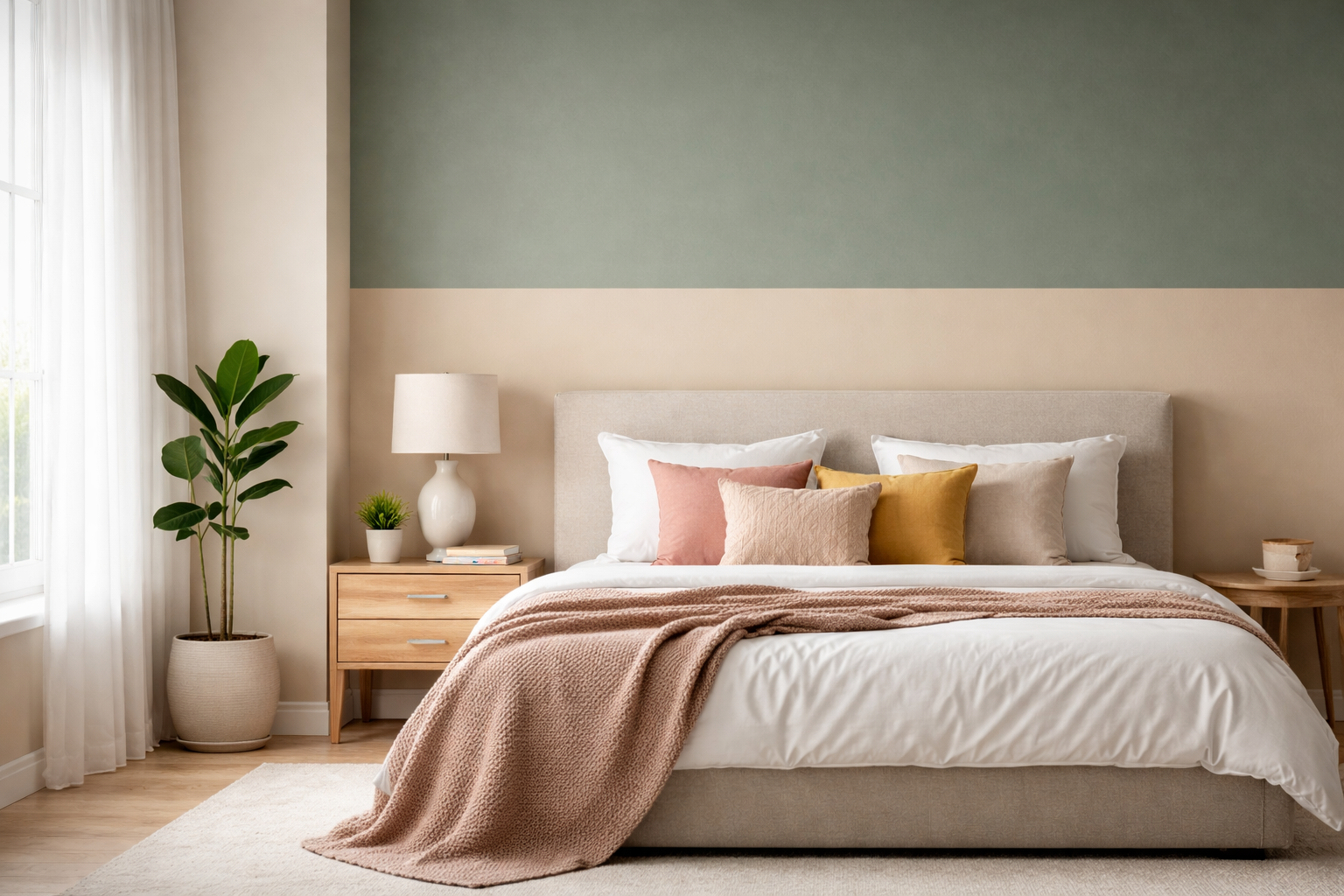
Your bedroom is more than just a place to sleep—it’s your personal retreat, a space where comfort meets style. Choosing the right bedroom wall colour combination plays a crucial role in setting the mood, enhancing aesthetics, and creating a relaxing environment.
The perfect room colour can make your bedroom feel bigger, brighter, cozier, or more luxurious. Whether you prefer subtle tones or bold contrasts, the right combination can completely transform your space. From soft neutrals to vibrant accents and soothing romantic bedroom colors, this guide explores the best colour combination for bedroom interiors that suit every style.
Why Bedroom Wall Colour Matters
Colors have a powerful psychological impact. The right bedroom wall colour combination can:
- Improve sleep quality
- Create a calming atmosphere
- Reflect your personality
- Enhance natural light
- Make small spaces appear larger
Choosing a normal bedroom colour like soft beige or pastel shades can offer timeless elegance, while bold combinations add character and uniqueness.
Book your personalized design consultation today!
Top 10 Bedroom Wall Colour Combinations
1. Soft White & Warm Beige
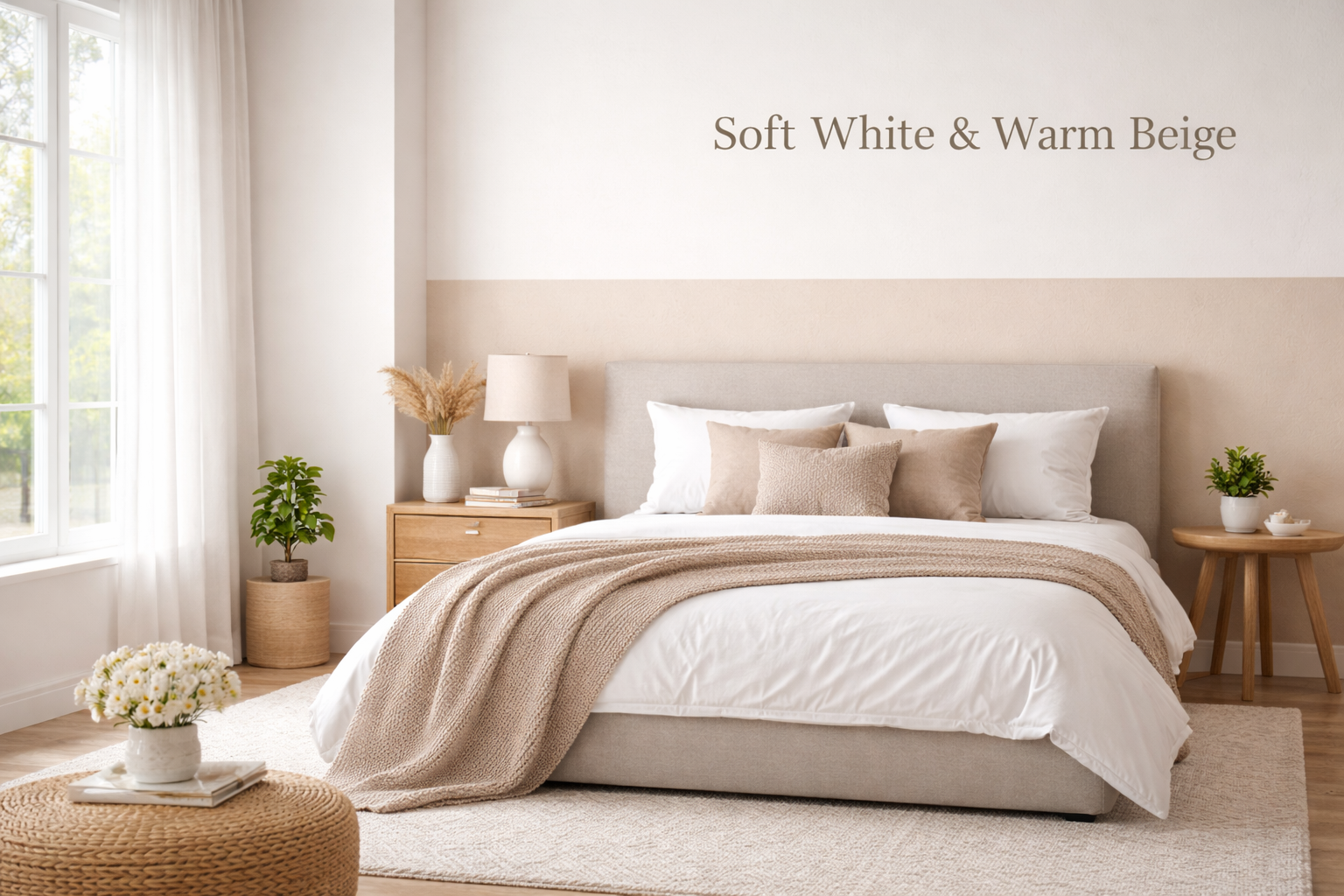
A classic bedroom wall colour combination that never goes out of style. White walls paired with beige tones create a clean, airy, and sophisticated space. This is an ideal romantic bedroom colour choice for minimal and modern homes.
2. Grey & Mustard Yellow
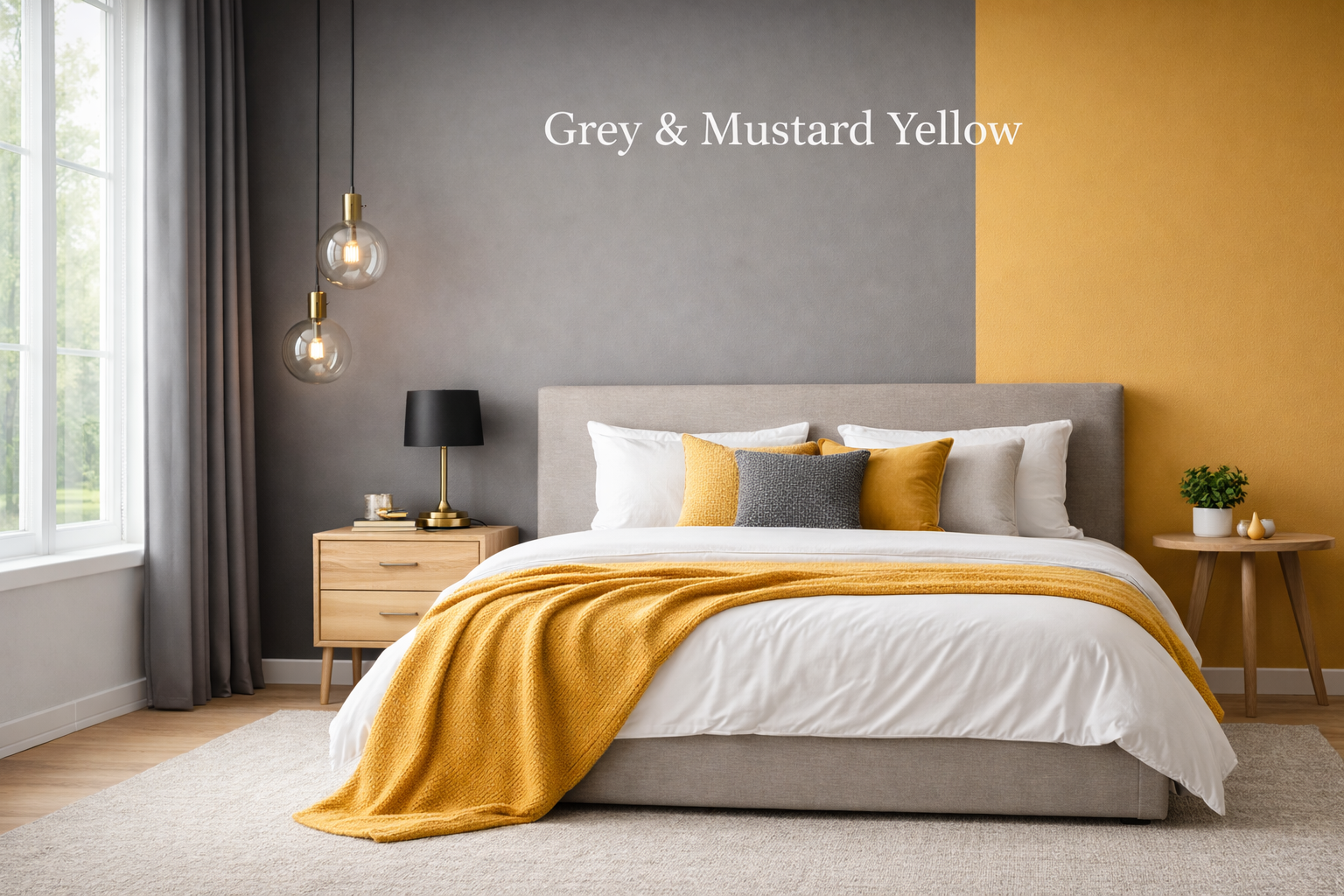
Grey adds depth, while mustard yellow introduces warmth and vibrancy. This trendy room colour pairing is perfect for those who want a modern yet energetic vibe. It’s considered one of the best colour combinations for bedroom designs today.
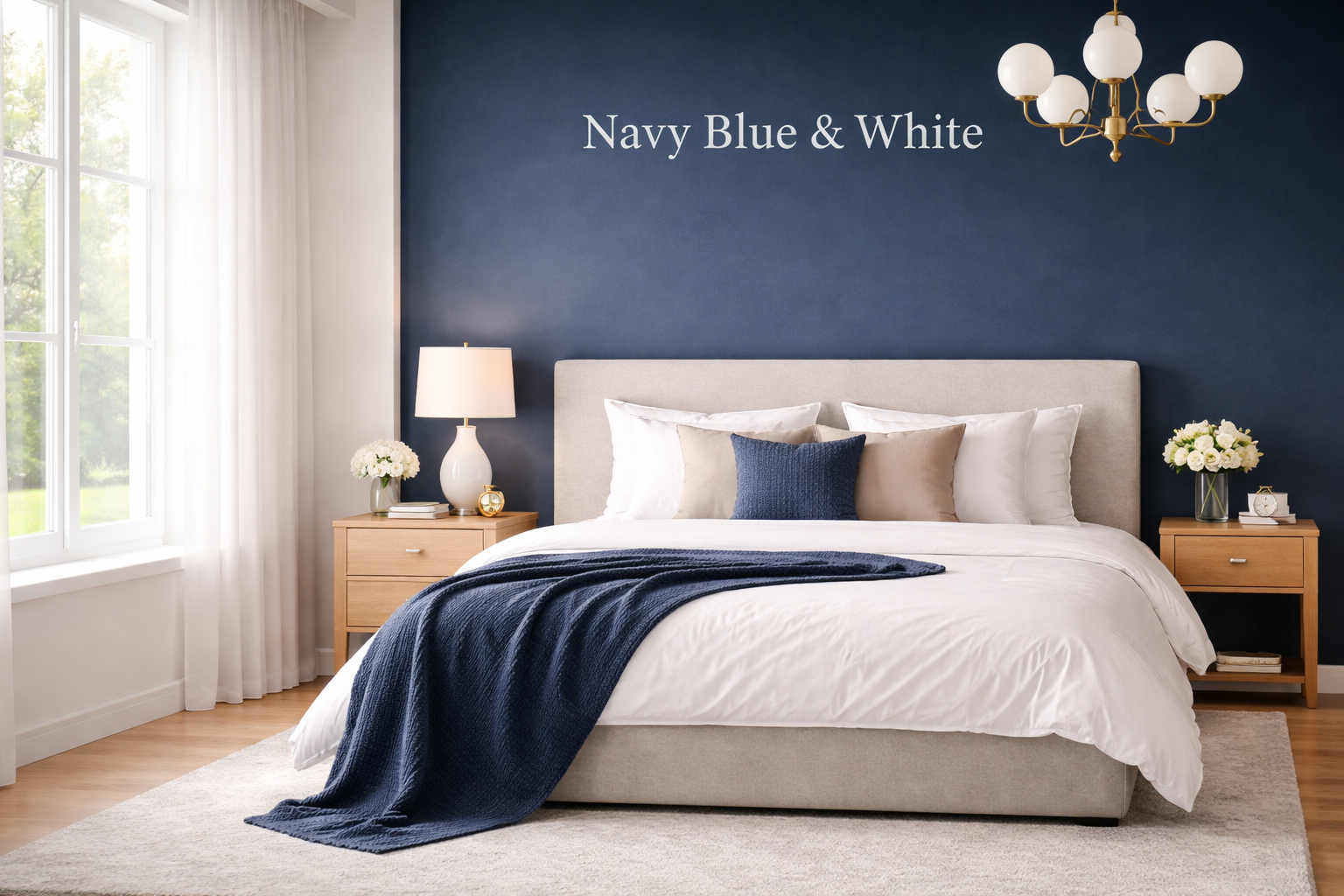
3. Navy Blue & White
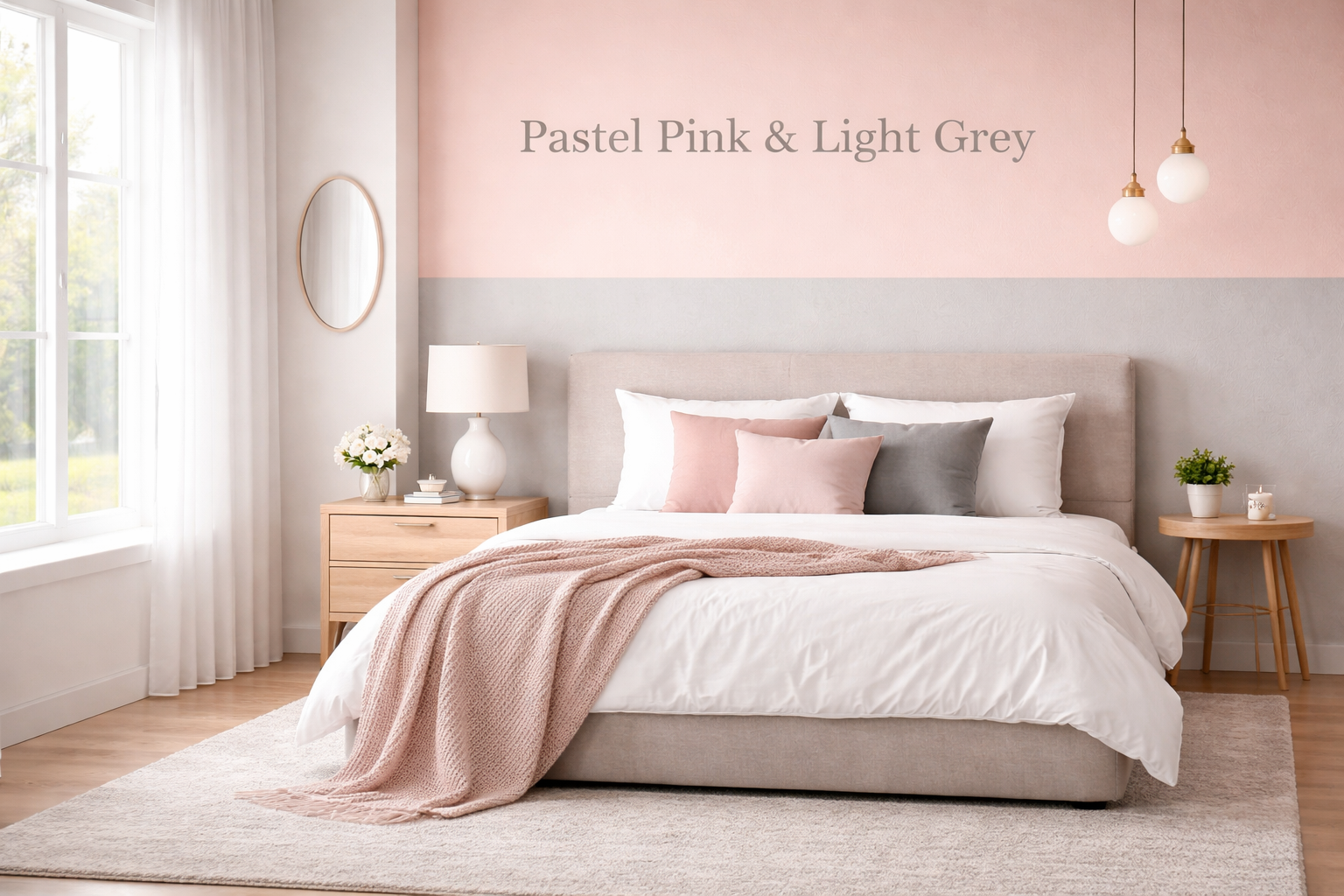
4. Pastel Pink & Light Grey
5. Olive Green & Cream
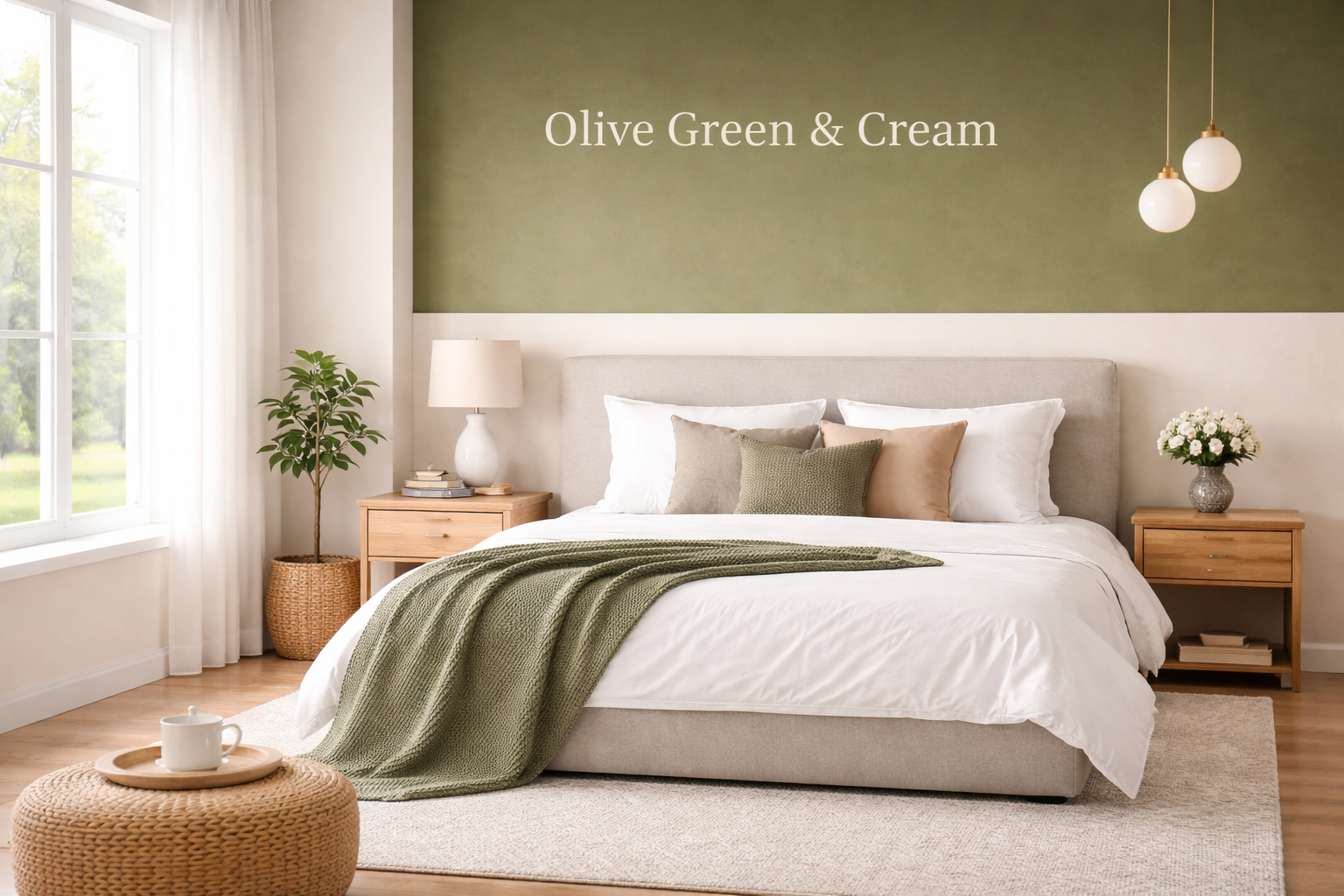
Inspired by nature, this room colour combination brings freshness and warmth into your bedroom. Olive green adds richness, while cream keeps the space light and balanced.
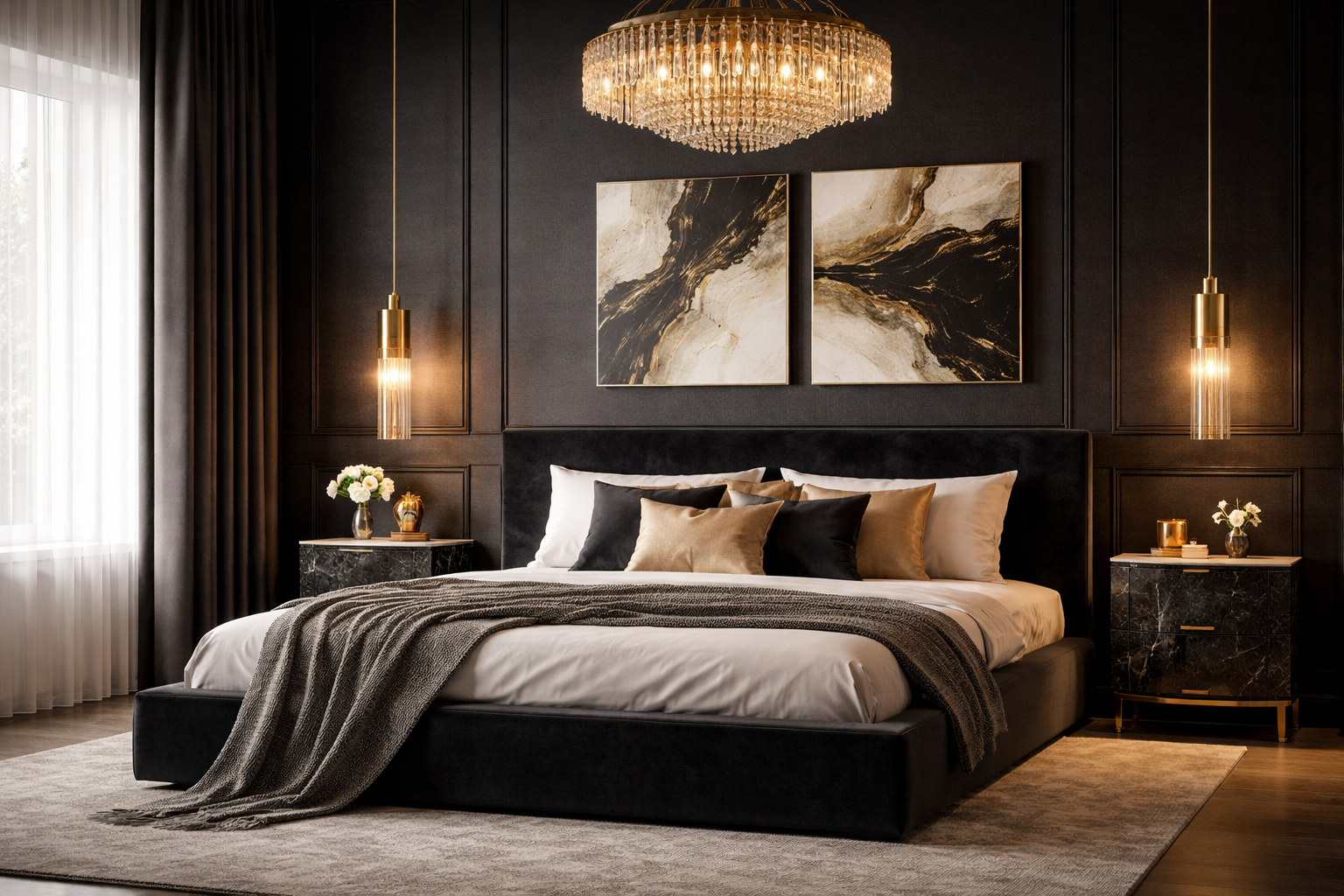
6. Black & Gold Accents
7. Sky Blue & White
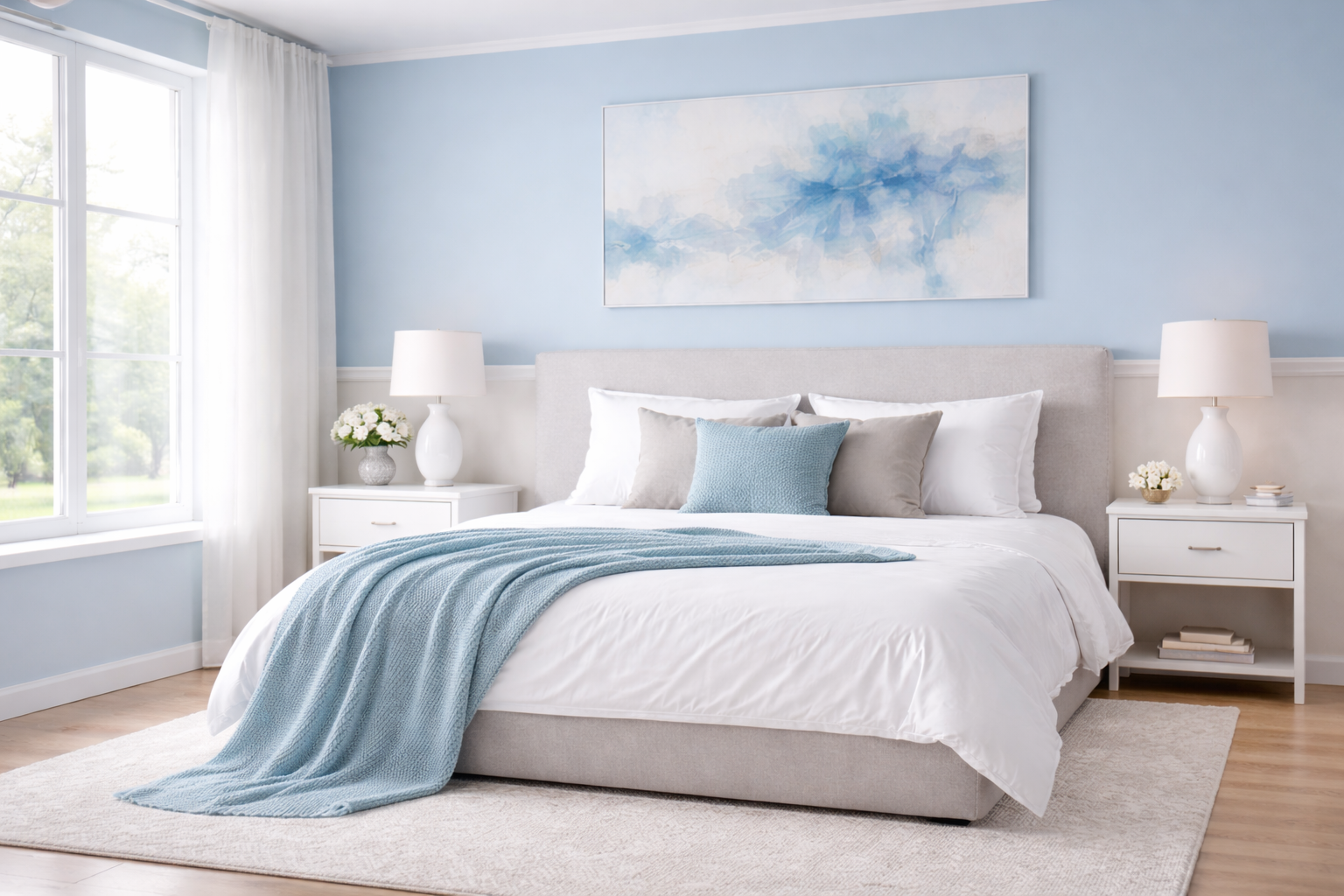
A refreshing and calming normal bedroom colour, this combination makes your room feel spacious and airy. Perfect for smaller bedrooms or spaces with limited natural light.
8. Lavender & Off-White
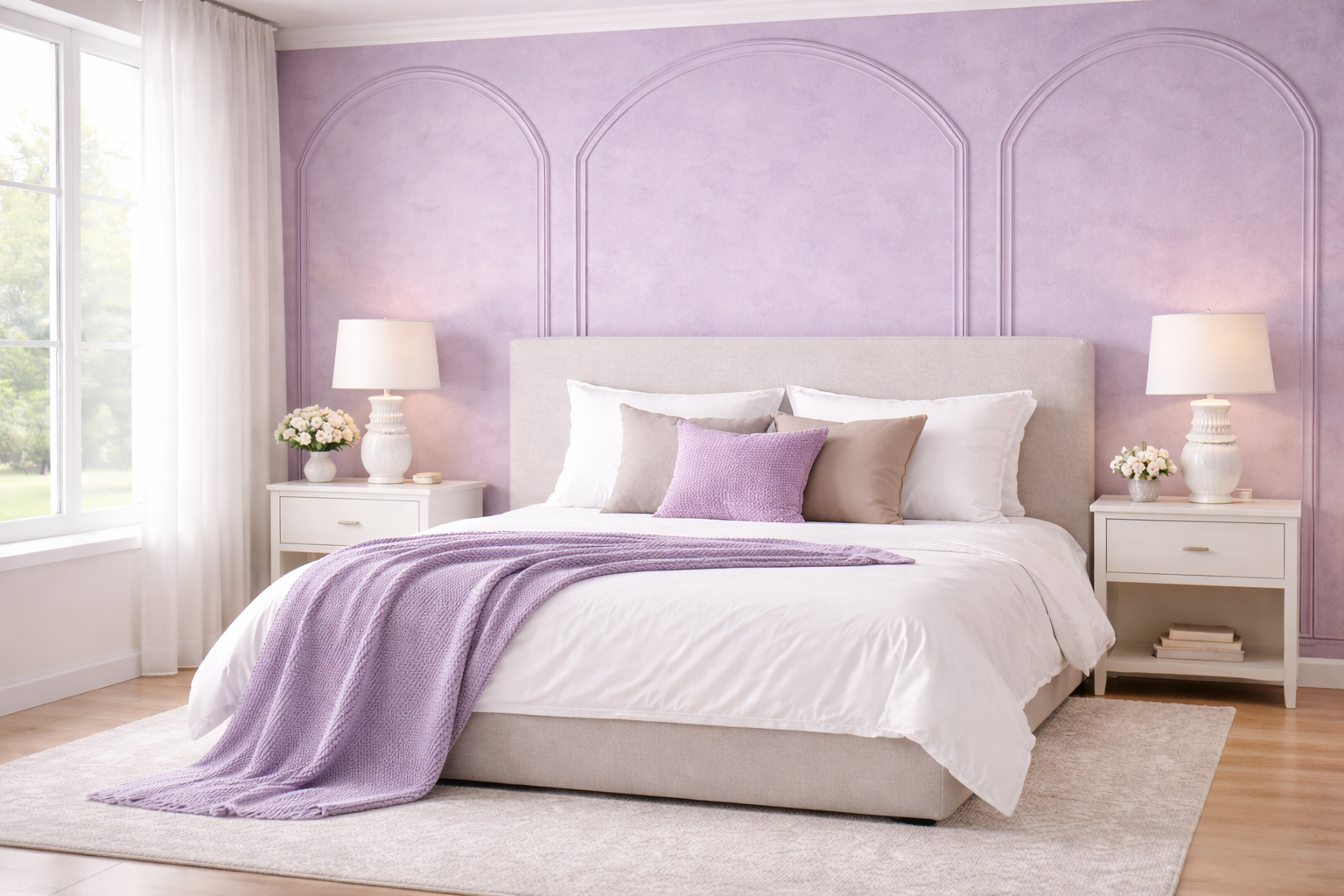
Lavender is known for its calming effect, making it one of the most loved romantic bedroom colors. Paired with off-white, it creates a dreamy and peaceful environment.
9. Terracotta & Beige
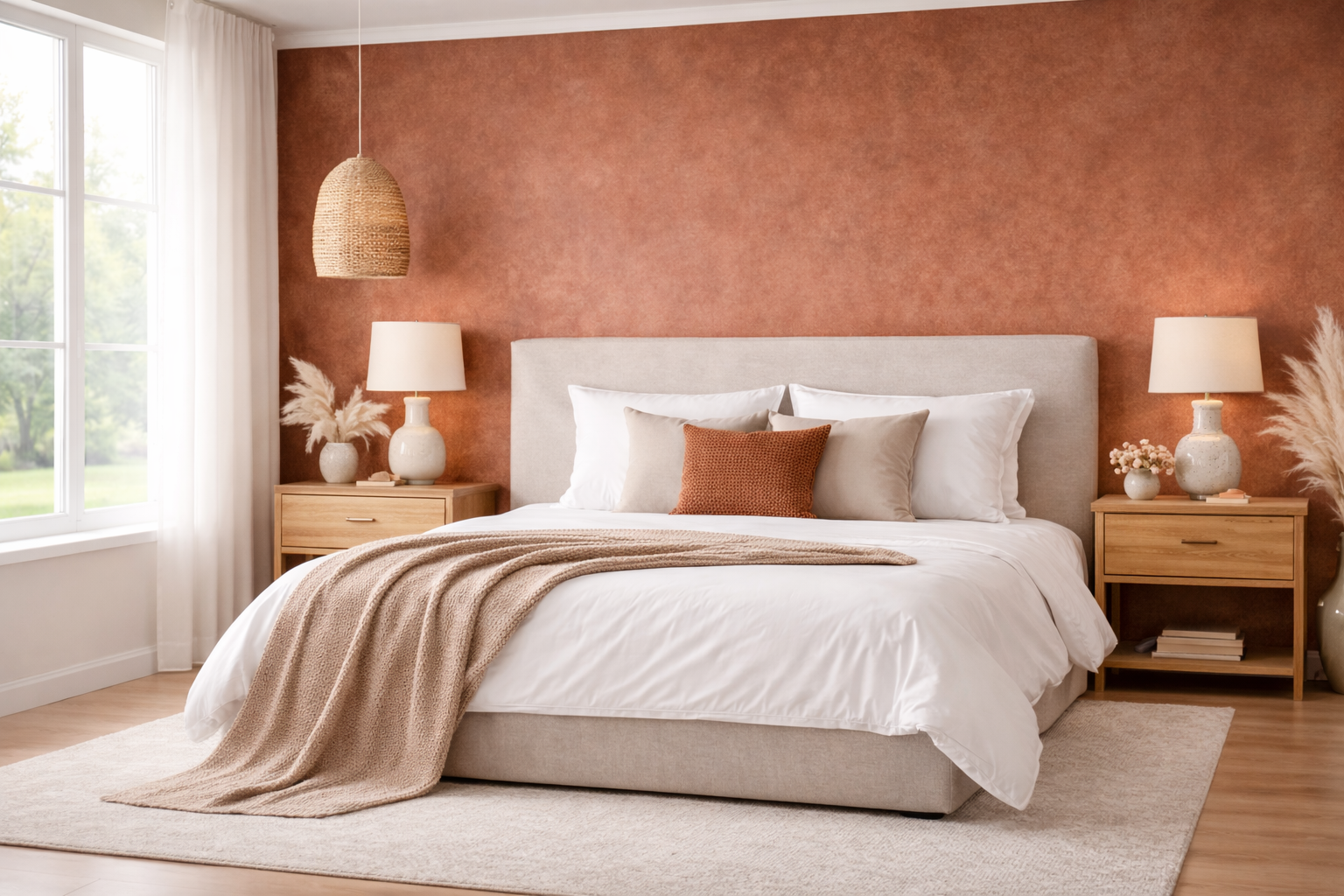
Earthy and warm, this bedroom wall colour combination adds depth and comfort. It’s perfect for those who prefer natural tones and a cozy interior style.
10. Charcoal Grey & Blush Pink
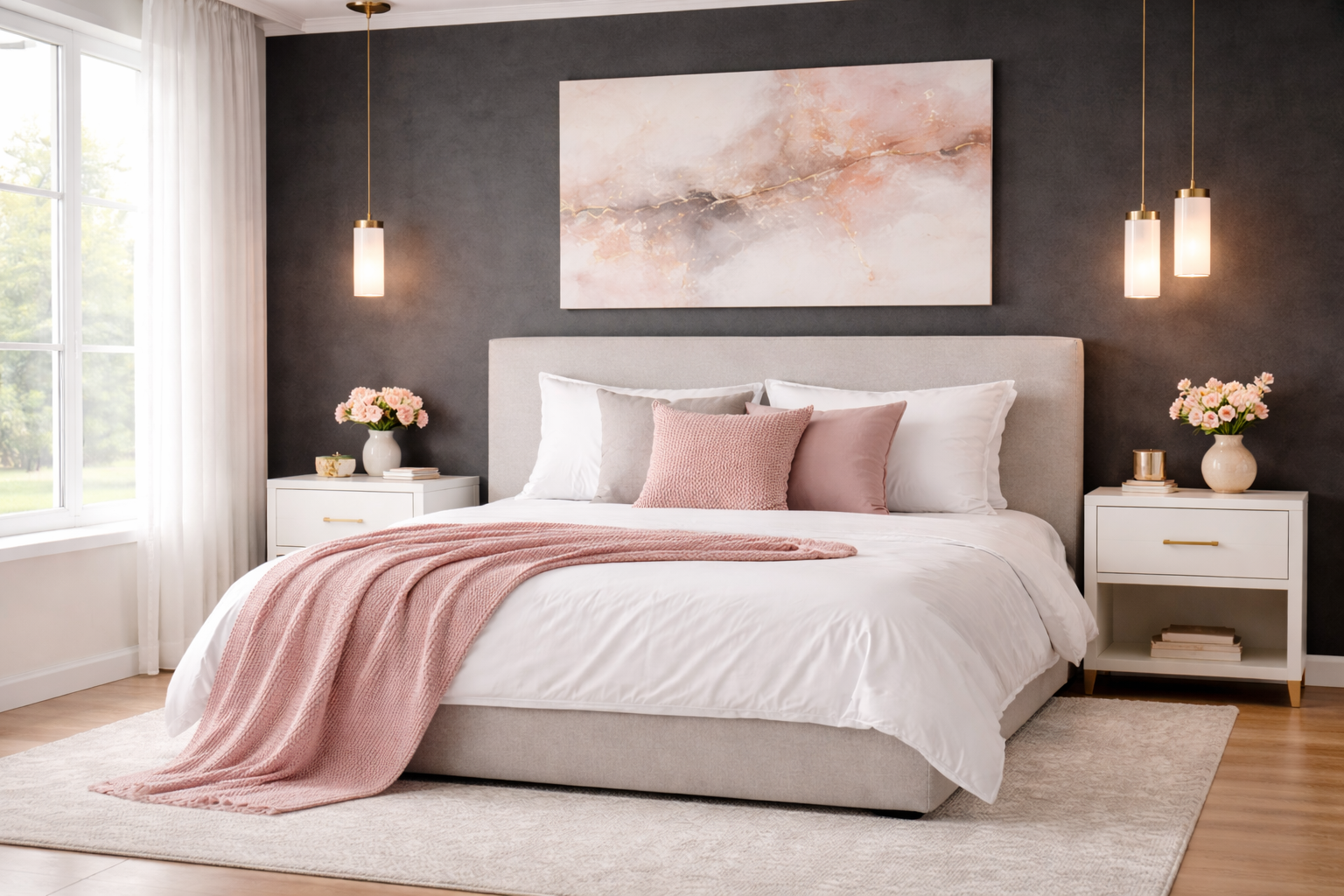
A modern room colour mix that balances boldness with softness. Charcoal grey adds drama, while blush pink softens the overall look, creating a stylish and contemporary bedroom.
How to Choose the Perfect Bedroom Wall Colour Combination
- Consider Room Size : Lighter shades make small rooms appear larger and more open, while darker tones add depth to spacious bedrooms. A normal bedroom colour like soft white or pastel shades works well in compact spaces.
- Understand Lighting: Natural and artificial lighting can significantly affect how colors look. Bright rooms can handle darker shades, while dim spaces benefit from lighter room colour combinations.
- Match Your Style: Your bedroom should reflect your personality. If you love calm and relaxing spaces, go for romantic bedroom colors like lavender, pastel pink, or soft blue. For a modern look, try bold contrasts.
- Use the 60-30-10 Rule: This balance helps create a cohesive and visually appealing bedroom wall colour combination.
- 60% dominant color (walls)
- 30% secondary color (furniture)
- 10% accent color (decor)
- Test Before Finalizing: Always test paint samples on your wall before making a final decision. Colors may look different depending on lighting and surroundings.
- Focus on Mood: Decide how you want your bedroom to feel—calm, cozy, luxurious, or vibrant. This will guide you toward the best colour combination for the bedroom that suits your needs.
Modern Trends in Bedroom Wall Colours
Minimalist Neutrals
Common Mistakes to Avoid
- Using too many colors in one space
- Ignoring lighting conditions
- Choosing trends over personal comfort
- Not testing colors before painting
- Overusing dark shades in small rooms